Biodiversity Dips When Japanese Rice Paddies Go Fallow

Large-scale farms that generally grow a single crop at a time and are managed conventionally are, by design, lacking in biodiversity. Abandoning such farms and allowing nature to take its course should, not surprisingly, result in a dramatic uptick in biodiversity. Plant colonization of abandoned farmland (also referred to as old field succession) is well studied and is regularly used as an example of secondary succession in ecology textbooks. The scenario seems obvious: cease agriculture operations, relinquish the land back to nature, and given enough time it will be transformed into a thriving natural community replete with diverse forms of plants and animals. This is an oversimplification, of course, and results will vary with each abandoned piece of land depending on the circumstances, but it generally seems to be the story. So what about when it isn’t?

Rice farming in Japan began at least 2400 years ago. Rice had been domesticated in China long before that, and when it eventually arrived in Japan it shaped the culture dramatically. For hundreds of years rice was farmed in small, terraced paddies in the mountains of Japan. Dennis Normile writes about these traditional, rice paddies in a recent issue of Science. He describes how they were found in villages “nestled in a forested valley” accompanied by vegetable plots, orchards, and pasture. Today, farms like these are “endangered,” and as they have become increasingly abandoned, plants, insects, and other wildlife that have historically thrived there are suffering.

Since the 1960’s, a combination of factors has resulted in the decline of traditional rice farming in Japan. For one, large scale farming has led to the consolidation of paddies, which are farmed more intensively. Diets in Japan have also shifted, resulting in a preference for bread and pasta over rice. Additionally, Japan’s population is shrinking, and residents of rural areas are migrating to cities. Traditional rice farmers are aging, and younger generations are showing little interest in pursuing this career.
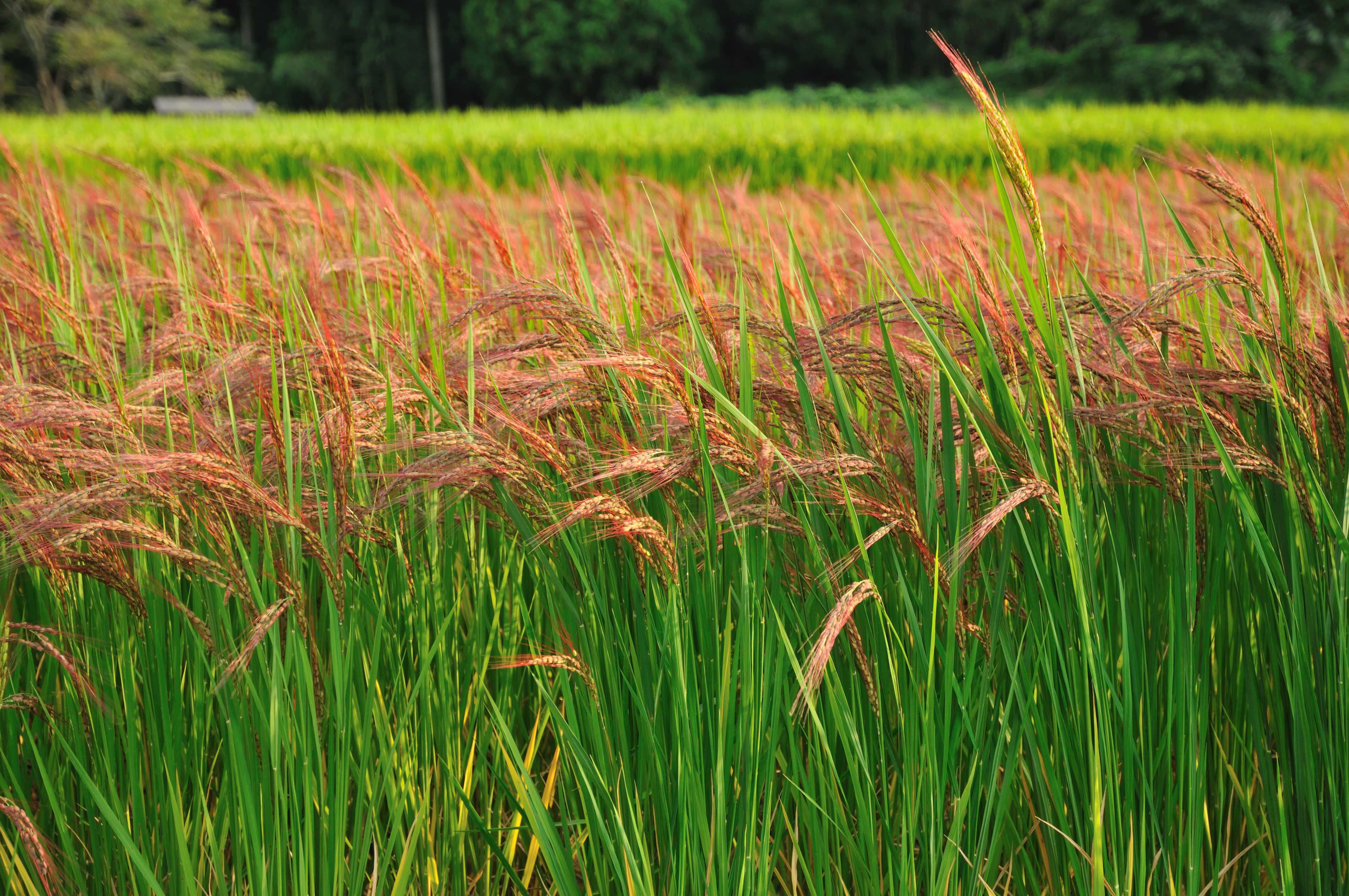
Red rice paddy in Japan - photo credit: wikimedia commons

Red rice paddy in Japan – photo credit: wikimedia commons

Demographic and dietary concerns aside, why in this case is the abandonment of agriculture imperiling species? The answer appears to be in both the way that the rice paddies have been historically managed and the length of time that they have been managed that way. Agriculture, by its very nature, creates novel ecosystems, and if the practice continues long enough, surrounding flora and fauna could theoretically coevolve along with the practice. When the practice is discontinued, species that have come to rely on it become threatened.

Traditional rice paddies are, as Normile describes, “rimmed by banks so that they can be flooded and drained.” Farmers “encouraged wild grassland plants to grow on the banks because the roots stabilize the soil.” The banks are mowed at least twice a year, which helps keep woody shrubs and trees from establishing on the banks. In some areas, rice farming began where primitive people of Japan were burning frequently to encourage grassland habitat. Maintaining grassland species around rice paddies perpetuated the grassland habitat engineered by primitive cultures.

As rice paddies are abandoned and the surrounding grasslands are no longer maintained, invasive species like kudzu and a North American species of goldenrod have been moving in and dominating the landscape resulting in the decline of native plants and insects. Normile reports that the abandoned grasslands are not expected to return to native forests either since “surrounding forests…are a shadow of their old selves.”

Additionally, like most other parts of the world, Japan has lost much of its natural wetland habitat to development. Rice paddies provide habitat for wetland bird species. On paddies that have been abandoned or consolidated, researchers are finding fewer wetland bird species compared to paddies that are managed traditionally.
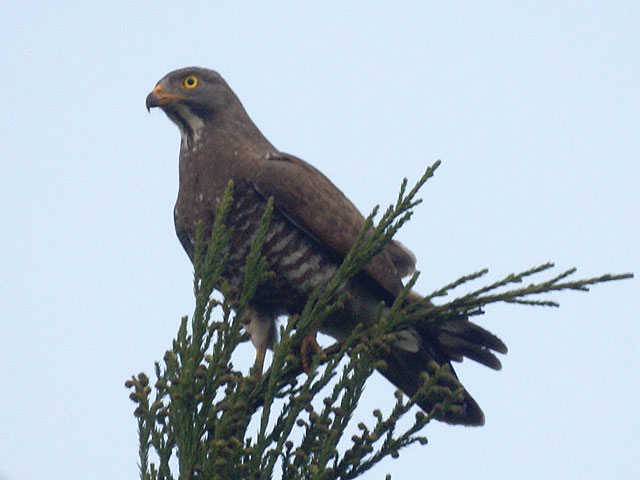
The gray-faced buzzard (Butastur indicus) is listed as vulnerable in Japan. It nests in forests and preys on insects, frogs, and other animals found in grasslands and rice paddies. It's decline has been linked to the abandonment and development of traditionally farmed rice paddies. (photo credit: wikimedia commons)

The gray-faced buzzard (Butastur indicus) is listed as vulnerable in Japan. It nests in forests and preys on insects, frogs, and other animals found in grasslands and rice paddies. Its decline has been linked to the abandonment and development of traditionally farmed rice paddies. (photo credit: wikimedia commons)

All of this adds fodder to an ongoing debate: “whether allowing farmland to revert to nature is a boon to biodiversity or actually harms it.” Where agriculture is a relatively new practice or where conventional practices dominate, abandoning agriculture would be expected to preserve and promote biodiversity. However, where certain agricultural practices have persisted for millenia, abandoning agriculture or converting  to modern day practices could result in endangerment and even extinction of some species. In the latter case, “rewilding” would require thoughtful consideration.

The thing that fascinates me the most about this report is just how intertwined humans are in the ecology of this planet. In many ways humans have done great harm to our environment and to the myriad other species that share it. We are a force to be reckoned with. Yet, the popular view that we are separate, above, apart, or even dominant over nature is an absurd one. For someone who cares deeply about the environment, this view has too often been accompanied by a sort of self-flagellation, cursing myself and my species for what we have done and continue to do to our home planet. Stories like this, however, offer an alternative perspective.

Humans are components of the natural world. We evolved just like every other living thing here, and so our actions as well as the actions of other species have helped shape the way the world looks. If our species had met its demise early in its evolutionary trajectory, the world would look very different. But we persisted, and as it turns out, despite the destruction we have caused and the species we have eliminated, we have simultaneously played a role in the evolution and persistence of many other species as well. We must learn to tread lightly – for the sake of our own species as well as others – but we should also quit considering ourselves “other than” nature, and we should stop beating ourselves up for our collective “mistakes.” It seems that when we come to recognize how connected we are to nature we will have greater motivation to protect it.

Additional Resources:

Flood Irrigation and Migrating Waterfowl

It’s American Wetlands Month. Last year around this time, I wrote a brief post describing the importance of wetlands and why they are a conservation concern. This year I thought I would write a little about an issue surrounding wetlands that has recently come to my attention: flood irrigated agricultural land and its benefit to migrating waterfowl.

The term “waterfowl” refers to birds that live on or around freshwater, such as ducks, geese, and swans. Like many other birds, they are migratory, typically flying north in the spring to breed and spend the summer raising their young, and then flying back south in the fall to overwinter. There are four major flyways (or migratory flight paths) in the United States: Pacific, Mississippi, Central, and Atlantic. Along these flyways, migrating birds need places to rest and feed in order to maintain the strength to make it to their seasonal homes. As wetlands have disappeared across the country (and the world), essential areas of respite have become few and far between, threatening the survival of this important group of birds.

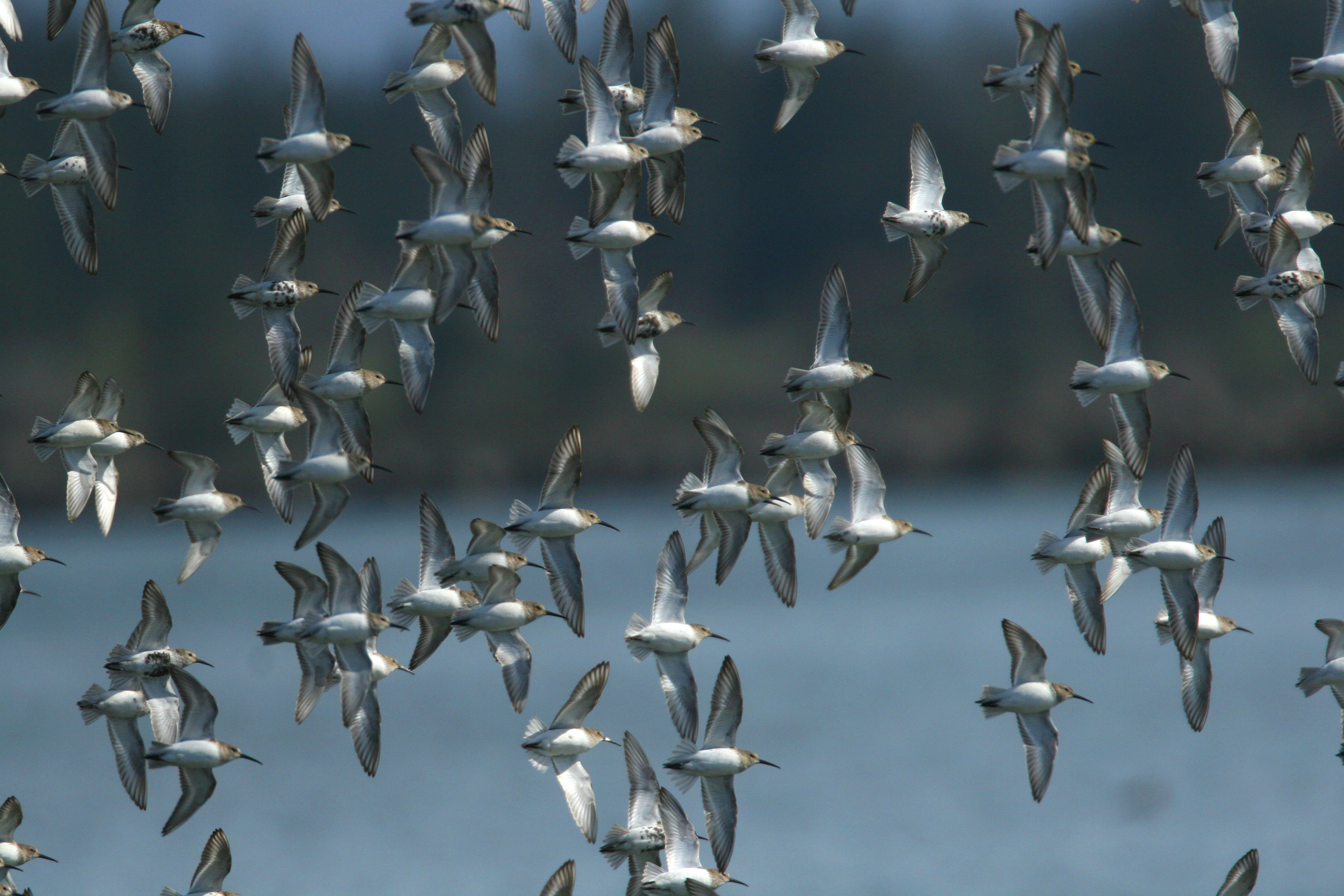
Dunlins - Calidris alpina (photo credit: www.eol.org)

Dunlins – Calidris alpina (photo credit: www.eol.org)

Historically, wetlands have largely been diminished and degraded due to human settlement on the floodplains of major rivers. Floodplains are examples of temporary or seasonal wetlands, flooded in the spring when snow in the mountains is melting and during periods of heavy rains but otherwise dry throughout most of the year. These areas appealed to early settlers because they were flat, had great soil for agriculture, and were near a water source. The only downside was the flooding, so levees and dams were built, diversions were made, and eventually these great rivers were tamed, virtually eliminating their status as seasonal wetlands and the important ecological functions that go along with that.

This has spelled disaster for migrating waterfowl who rely on floodplains to be flooded in the spring, providing them with staging habitat on their journey north. Biologists have recognized this issue and have made efforts to protect and restore wetlands in order to provide this essential habitat. But restoring wetlands is a major feat. Rivers that supply both temporary and permanent wetlands aren’t what they used to be. There are myriad diversions and modifications, and with a continually growing human population, too many uses for the water. So that’s where farmers and ranchers come in.

In the spring, many farmers and ranchers flood their fields in order to irrigate crops. Migrating waterfowl take advantage of these flooded fields, stopping to rest and feed. Recognizing the role that flood irrigation has on the survival of these birds, biologists are working with farmers and ranchers along flyways to ensure that their land will remain in agriculture and that land owners will continue to flood irrigate (rather than switching to overhead irrigation). In California for example, rice farmers are being paid by the Nature Conservancy to flood their fields in conjunction with spring and fall migrations in order to ensure that birds will have staging habitat along the way. So, despite humans playing a major role in reducing habitat that migrating waterfowl require for survival, we are finding ways to make up for it. This is just one example of how we can help protect and improve biodiversity in our human-dominated landscapes.

Read more about protecting migrating waterfowl in the Pacific Flyway here.

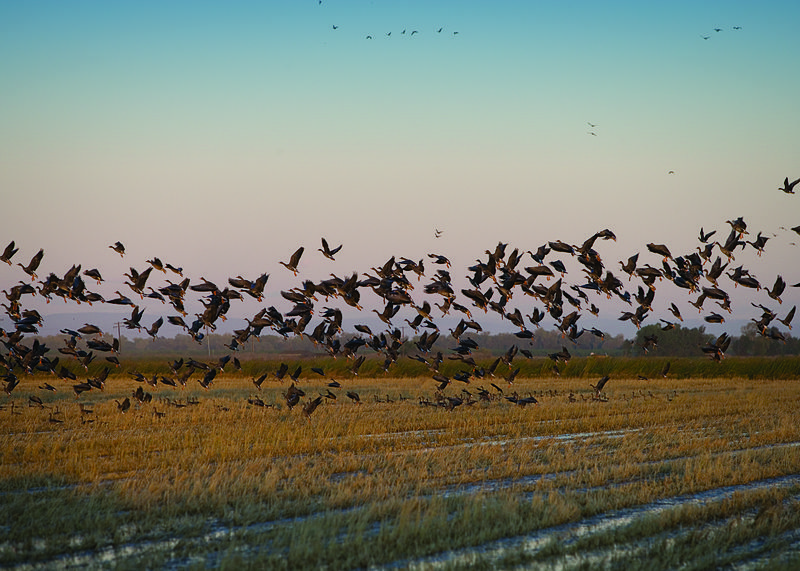
Geese in a Flooded Rice Field in California (photo credit: NRCS)

Geese in a Flooded Rice Field in California (photo credit: NRCS)

Celebrate American Wetlands Month by learning more about them. Here are some links to get you started:

U.S. Environmental Protection Agency

Association of State Wetland Managers

Defenders of Wildlife


Venus Flytrap: A Species of Special Concern

The Venus flytrap is likely the most popular and well-known (as well as the most purchased and widely owned) of any carnivorous plant. It is a proud representative of a diverse group of plants that continues to astound most everyone from plant experts to plant amateurs and even the plant ambivalent. With its leaves shaped like gaping mouths with sharp teeth and its ability to snap shut and devour insect prey, it is a remarkable species, but would you believe that it is also a rare one?

The Venus flytrap (Dionaea muscipula) is native to a small region on the east coast of the United States near the border of North and South Carolina. Its range extends to about a 100 mile radius from Wilmington, NC. Within this region, the habitat of the Venus flytrap is mainly wet savannahs with sandy, peaty, acidic soils on the edges of swamps and fens. Thus with its limited range and specific habitat requirements, the Venus flytrap has always been a rare species, even before it became a popular houseplant.

Apart from being naturally rare, the Venus flytrap now faces numerous threats to its continued survival in the wild. The obvious one is its popularity, which has led to the harvesting of hundreds of thousands of wild plants to be cultivated and sold in the plant trade. Other threats involve its habitat. Wetlands are one of the most threatened ecosystems. They are frequently drained and developed for real estate, agriculture, and recreation, and they are regular victims of pollution and exotic species invasions. The wetlands that Venus flytraps call their home are no exception. Additionally, naturally occurring fires are being suppressed in this region, allowing larger plants normally kept in check by occasional fires to thrive and choke out low-growing Venus flytraps.

Despite these threats, the Venus flytrap has not yet been listed as a federally endangered species. However, it is currently listed as a species of special concern in North Carolina and is listed as Vulnerable on the IUCN Red List. Fortunately, wildlife officers in North Carolina do issue citations to anyone caught illegally harvesting Venus flytraps in order to deter such activity.

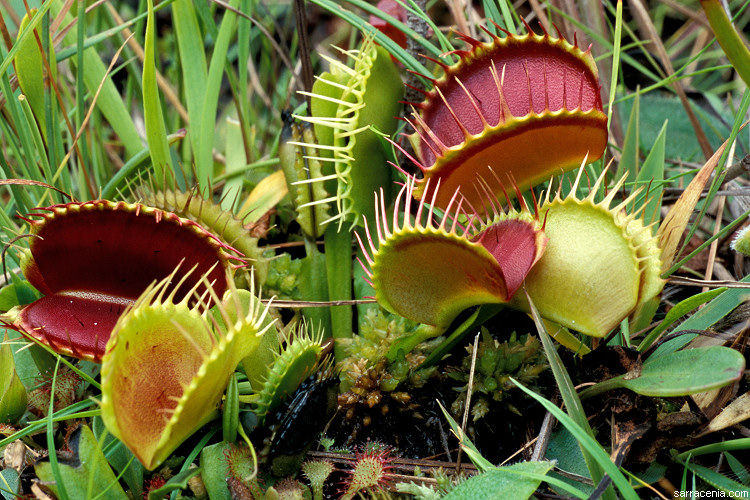
venus flytrap

Dionaea muscipula   © 2006 Barry Rice

If you are interested in owning a Venus flytrap, make certain that you are purchasing a nursery grown plant and not a wild harvested one. The plant label should specify this. To be sure you are purchasing a nursery grown plant, look for cultivar names, like ‘Red Dragon’ or ‘Royal Red’ (and many others). These are plant varieties that have been bred in tissue culture labs from cultivated plants.

To learn more about the Venus flytrap and its current conservation concerns, see this Encyclopedia of Life page.

Related Posts:

Northern Pitcher Plants: A Model for Understanding Food Webs

The Sundews

Overwintering Carnivorous Plants

Wetlands!

Wetlands!

From www.earthgauge.net:

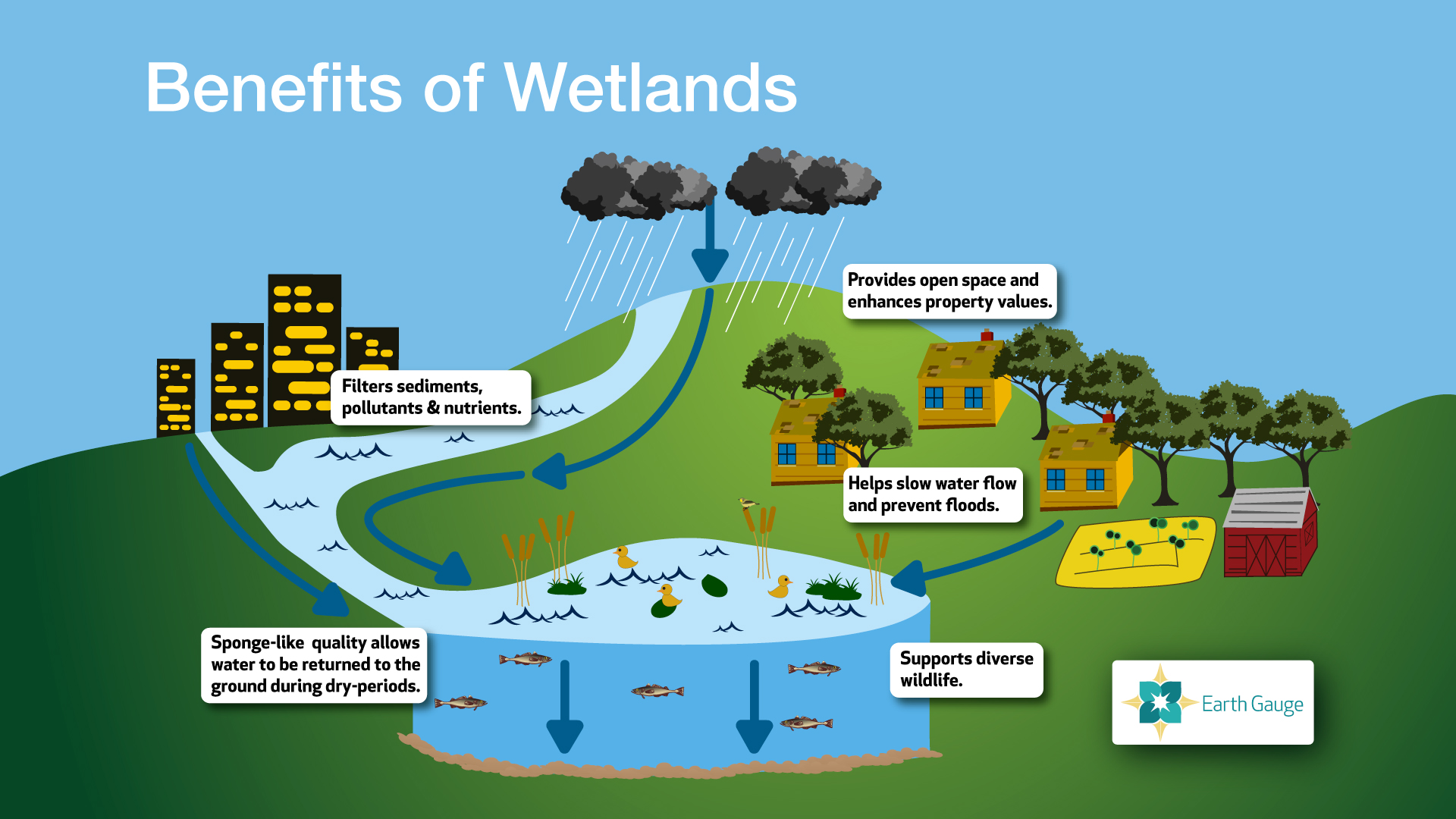
“May is American Wetlands Month! No matter where you live, chances are there’s a wetland nearby that provides important environmental benefits to your community. Wetlands support diverse fish and wildlife species, filter pollutants from rain water runoff, help recharge groundwater supplies, prevent flooding and enhance property values.”

Wetlands are ecosystems that are characterized by their vegetation (aquatic plants), their soils (formed during anaerobic conditions caused by being flooded or saturated with standing water), and, of course, their state of being largely saturated with water either seasonally or permanently. Examples of natural wetlands include bogs, fens, marshes, and swamps. Wetlands can also be constructed by humans for the purpose of collecting storm water runoff from urban areas in an effort to reduce the risk of flooding and avoid overwhelming municipal sewer systems during large rainstorms.

Wetlands are the most threatened type of ecosystem on earth, and we are losing them at a steady clip. Major threats to wetlands include land development, pollution (agricultural and otherwise), and the introduction of invasive species. Considering the benefits we receive from having wetlands around, it is imperative that we protect them. Earth Gauge offers some suggestions on how to do so.

wetland benefits

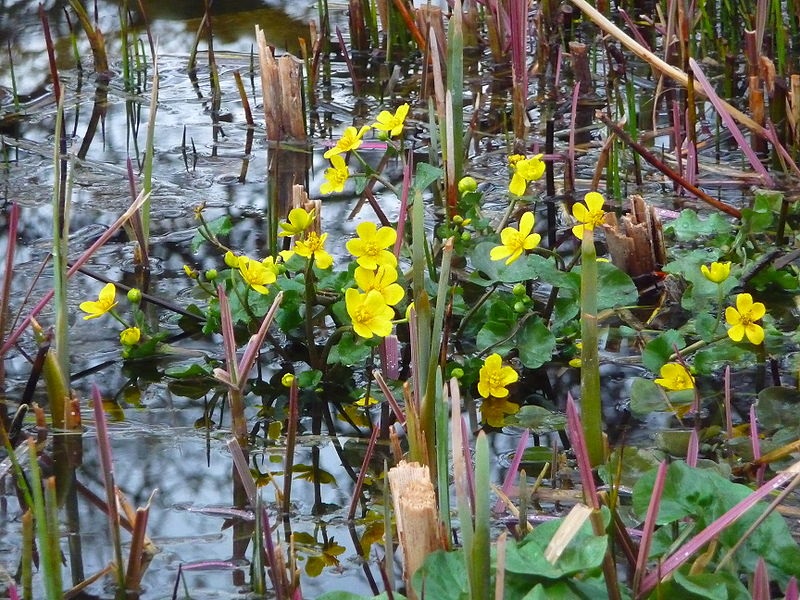
Speaking of wetlands, one of my favorite wetland plant species is marsh marigold (Caltha palustris). It is in the buttercup family (Ranunculaceae) and is common in wetlands throughout the Northern Hemisphere. I became familiar with this plant when I was volunteering at a wetland in Edwardsville, IL. Perhaps you’ve seen it growing in a wetland near you.

caltha palustris

marsh marigold (Caltha palustris) photo credit: wikimedia commons