New Weeds Project, etc.

When you make yourself the weeds guy, and the word gets out that you’re the guy to go to when it comes to weeds, invitations and inquiries start coming your way. Usually it’s just someone asking you to identify a weed or telling you how much they despise a particular plant for its weedy behaviors. Sometimes it’s writing a weeds-themed article or teaching a class about weeds. It can even be an invitation to go on a weeds walk and be interviewed for a television series. This time it’s something, perhaps, a bit bigger.

I won’t say too much about what the project is at this point. It’s a little too early in the process for the big reveal. However, I will say that it involves at least two things: weeds and the Pacific Northwest. That’s partly why I’m bringing this up.

Do you live in the Pacific Northwest? Would you be interested in talking about weeds sometime? If you’re reading this, and you think you might have some input on the subject, please let me know. You can get in touch using the contact form or by sending me a direct message on Instagram. I can give you more information at that point, and we can determine if there is a way you can help.

There will be more to come about this exciting new project in the near future. Meanwhile, my lack of posting, which you may or may not have noticed, is likely to continue for a while. Summers get pretty busy around here, and as much as I’d like to share more posts with you, it just doesn’t happen. The fact that I’m basically back in school for a couple semesters, along with this new opportunity that I’m not saying much about, has made it so that focusing on the blog isn’t getting much easier. But I’ll do what I can, and I’ll try to stay active on Instagram and other social media sites to (sort of) make up for it.

Thanks, as always, for your support, and thank you for putting up with this announcement about an upcoming and soon to be announced announcement.

———————

Support Awkward Botany by visiting our Bookshop. Do you have suggestions for books to add to our store? Let us know in the comment section below.

Weeds of Boise: Neglected Parking Lot Islands at Post Office on 13th Street

Boise’s summers are decidedly hot and dry. Months can pass without any measurable precipitation, meanwhile temperatures regularly peak in the 90’s. In the heat of the summer, multiple days in a row above 100 degrees Fahrenheit is not unheard of. Under these conditions, irrigation is a must if you intend to keep plants alive, particularly plants not adapted to our climate. Skipping out on watering or having something go awry with the irrigation system quickly becomes noticeable as the soil goes bone dry and plants begin to wither away. If this goes on for too long, many plants will not recover, including established trees and shrubs. However, the toughest plants among us, particularly the weeds, will move in to take their place.

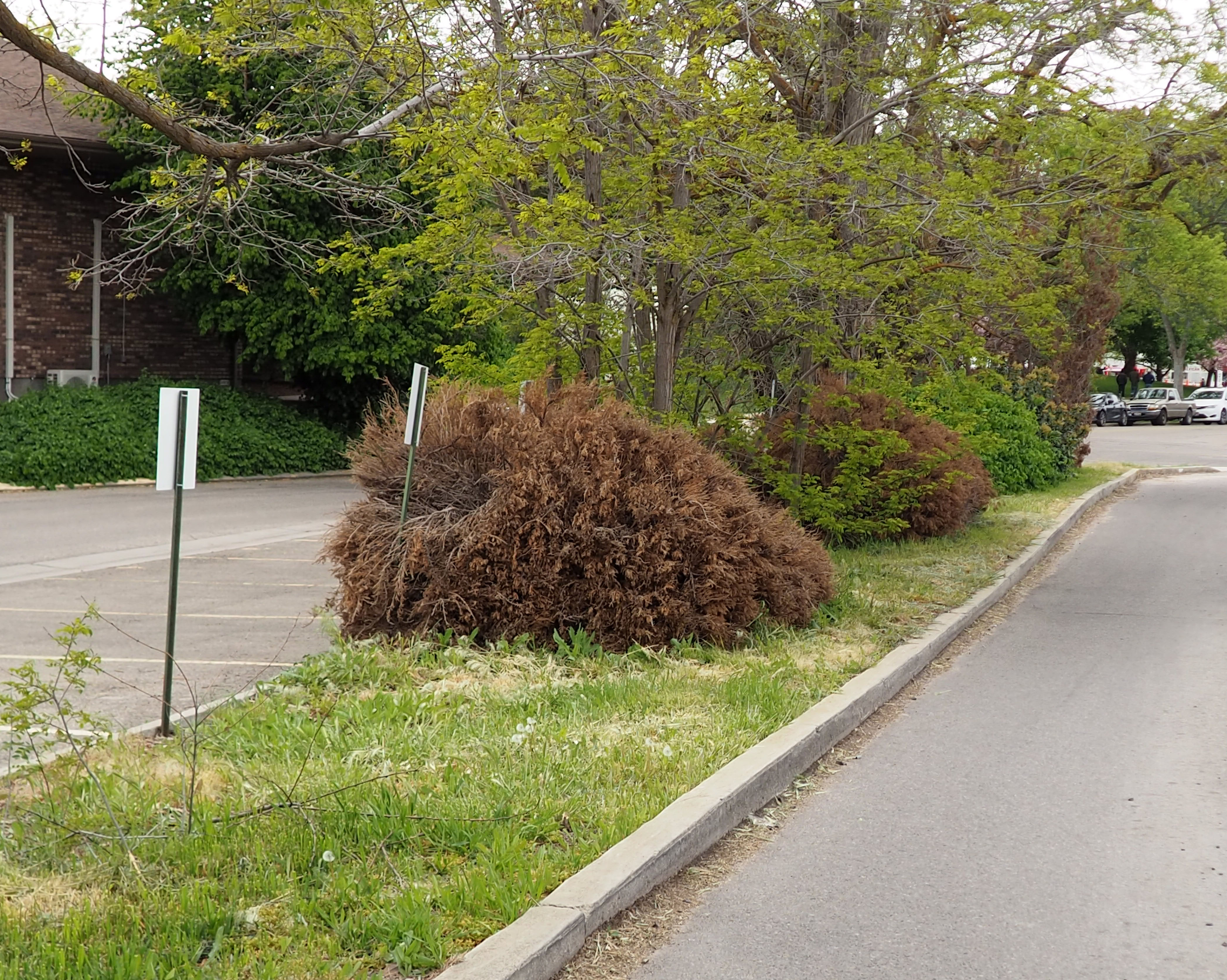
You can see an example of this at the United States Postal Service building at 13th Street and Shoreline Lane in Boise, Idaho. The islands in the parking lot are not being watered, which has clearly been the case for quite some time because even the trees and shrubs are dying off. Apart from occasional mowing, very little maintenance is occurring, and our wild urban flora is about all that remains.

parking lot island at the corner of 13 Street and Shoreline Lane

Parking lots are not ideal locations for growing plants. Asphalt and cement dominate – two major contributors to the urban heat island effect – and automobile pollution is concentrated on account of all the cars coming and going on a regular basis. Many parking lots include islands where plants (often poorly maintained), along with other features like signs and lights, are placed. In general, these islands are far too small for trees, but trees are planted nonetheless in a desperate attempt to shade these formidable environments. In locations where snow is common, the snow from parking lots is often piled up on these islands to clear room for cars, while road salts and other ice melts are heavily applied in order to keep people and cars from sliding around. Parking lot plants have to endure all this and more, so it’s no surprise that they usually look pretty rough.

The stresses of added heat, pollution, trampling, and poor care are enough for plants to put up with. Cut off their irrigation supply, and parking lot plants are sure to give up the ghost. A situation like this is an excellent place to familiarize yourself with your wild urban flora. Many weeds seemingly have no problem tolerating these conditions. To demonstrate this, I inventoried the weeds found in neglected parking lot islands at the post office on 13th Street and Shoreline Lane. What follows are a few photos and a list of the weeds I’ve identified so far. Like all posts in the Weeds of Boise series, this list may be updated as I continue to check back in on this location.

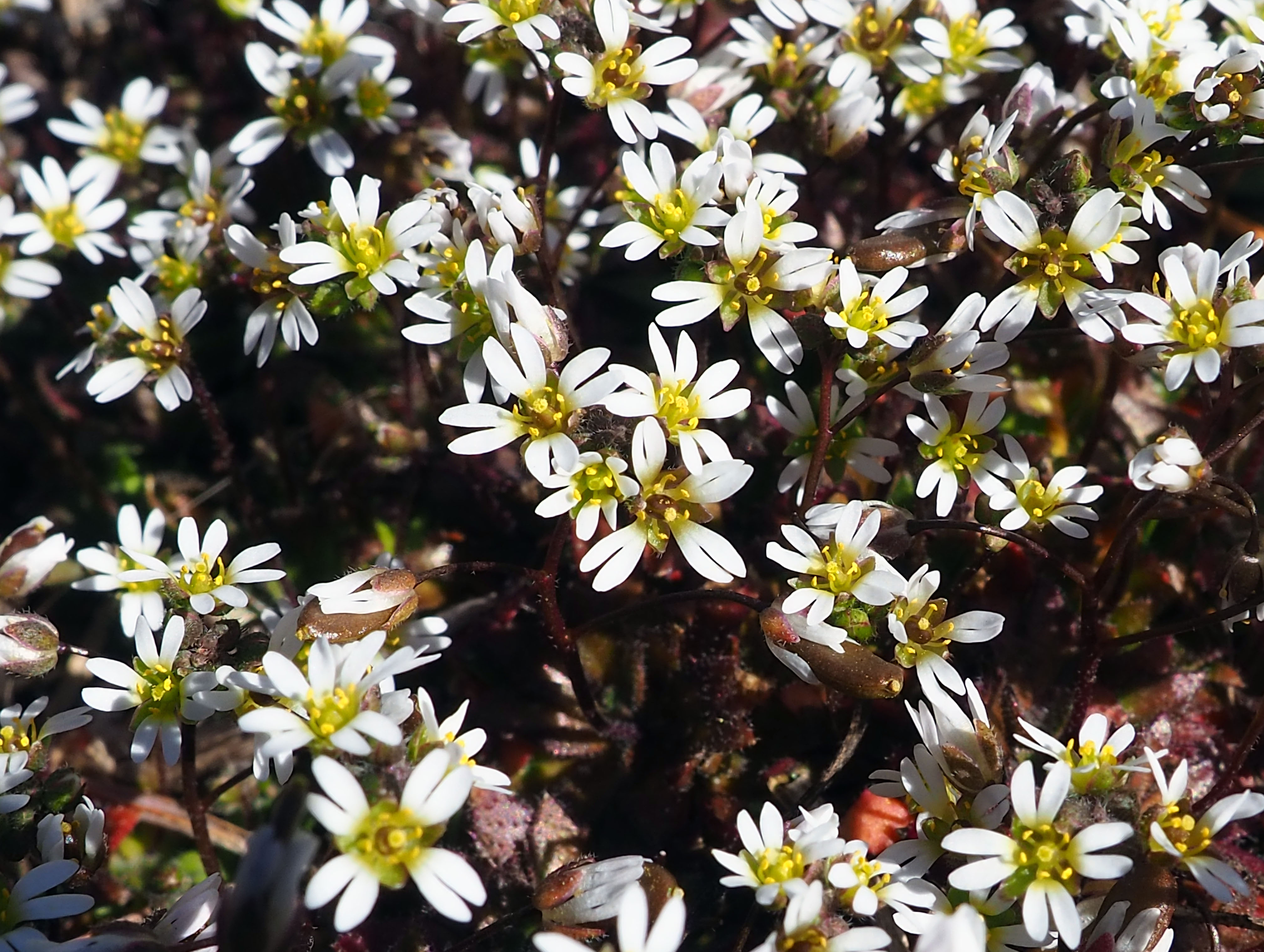
spring draba (Draba verna)
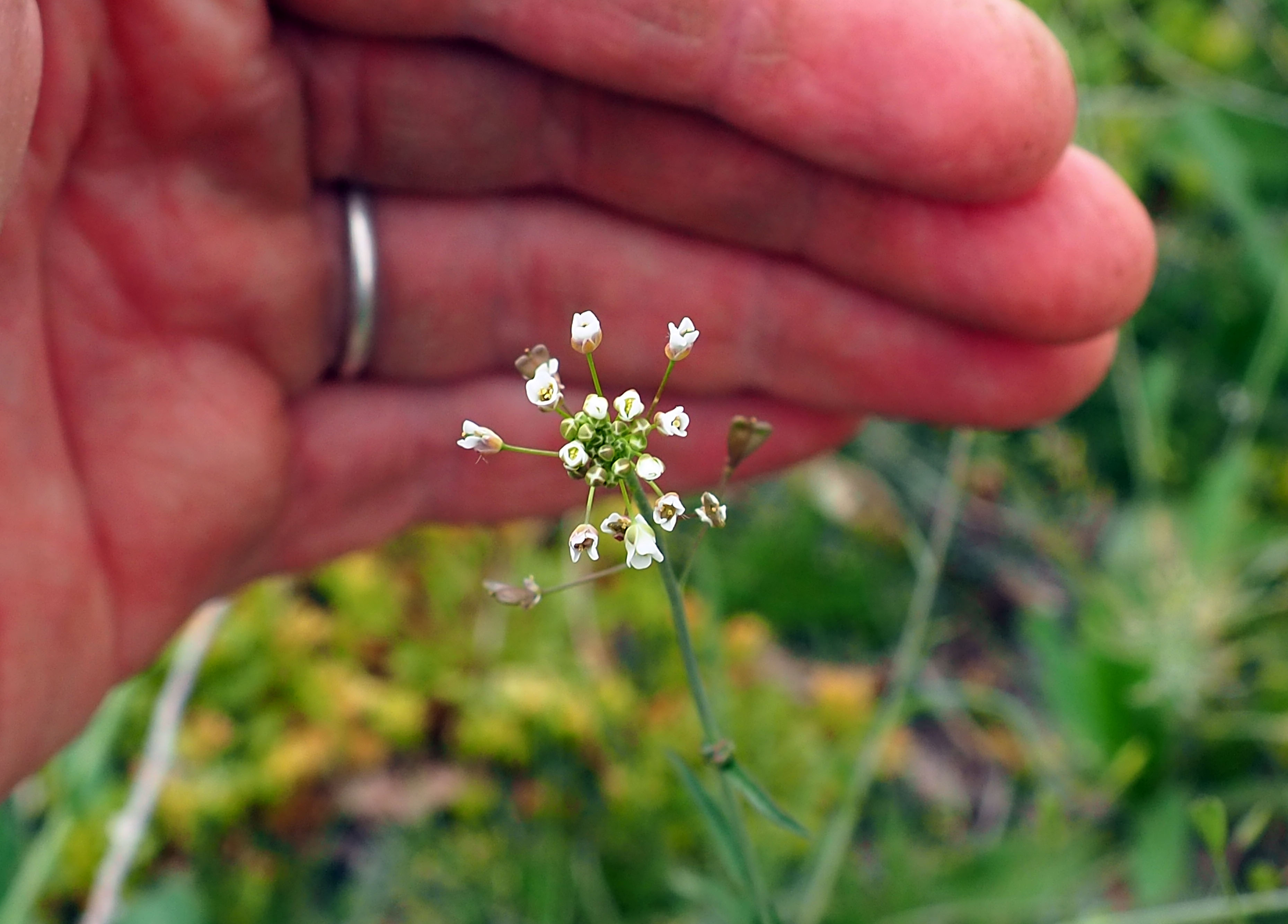
shepherd’s purse (Capsella bursa-pastoris)
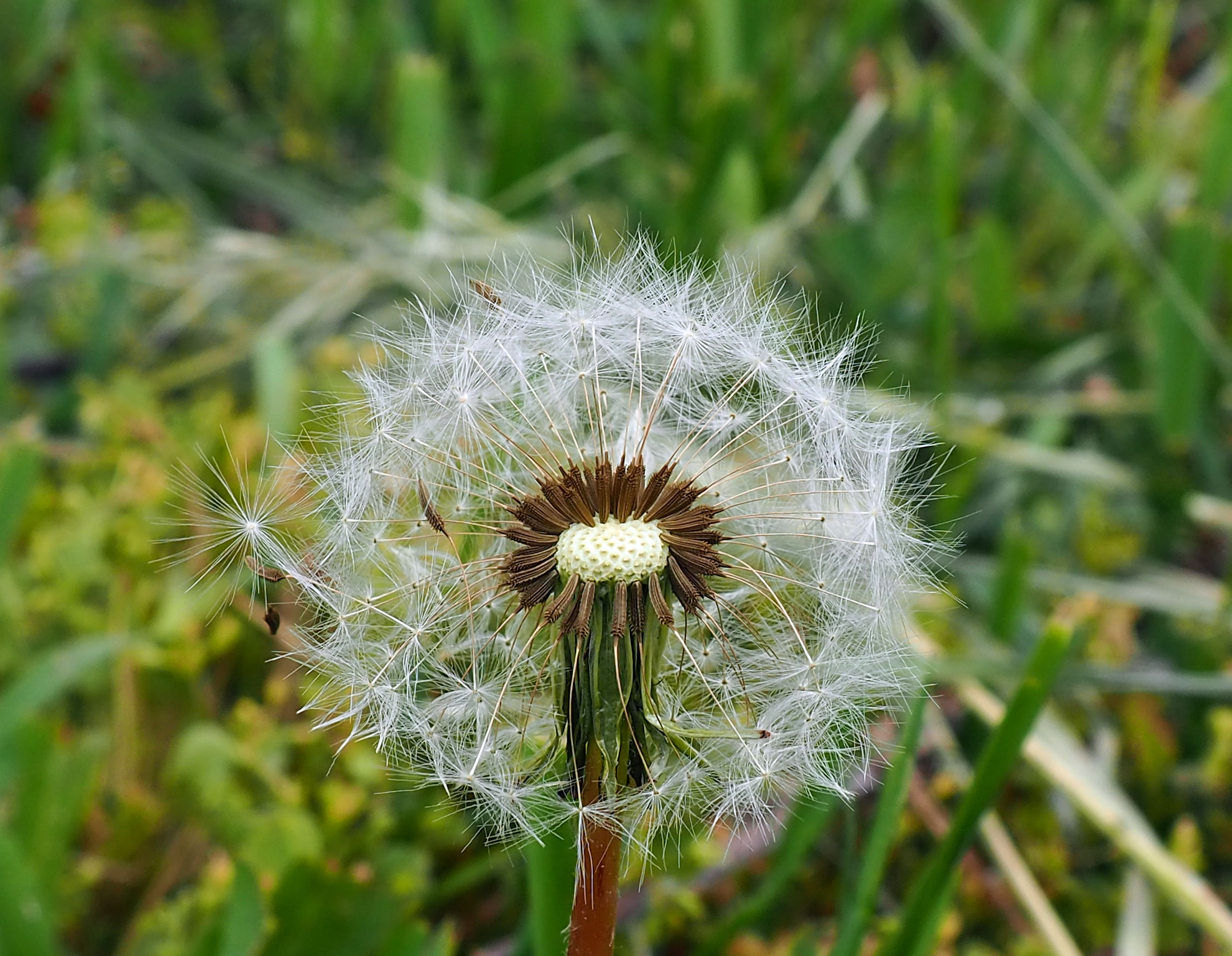
dandelion (Taraxacum officinale)
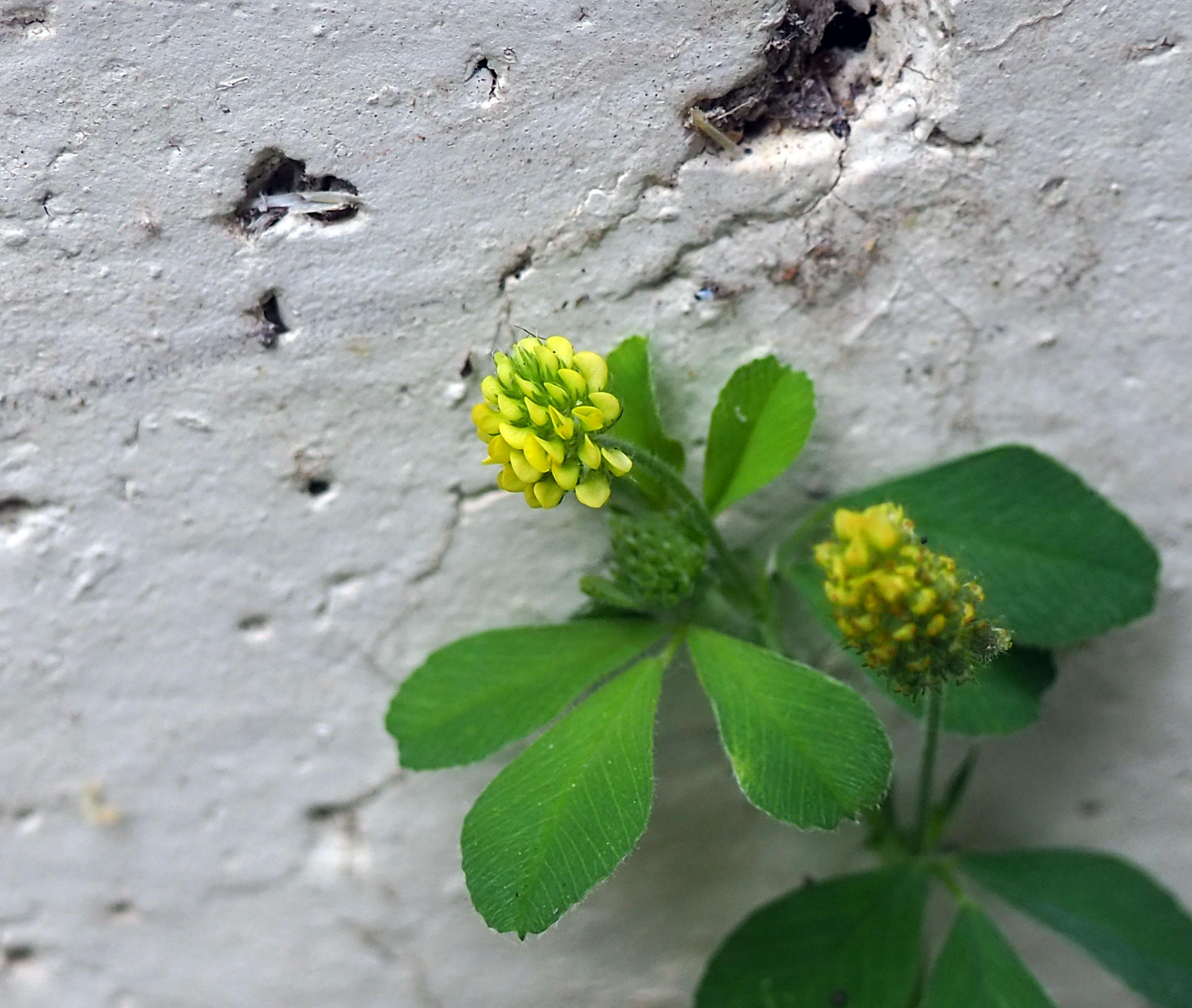
black medic (Medicago lupulina)
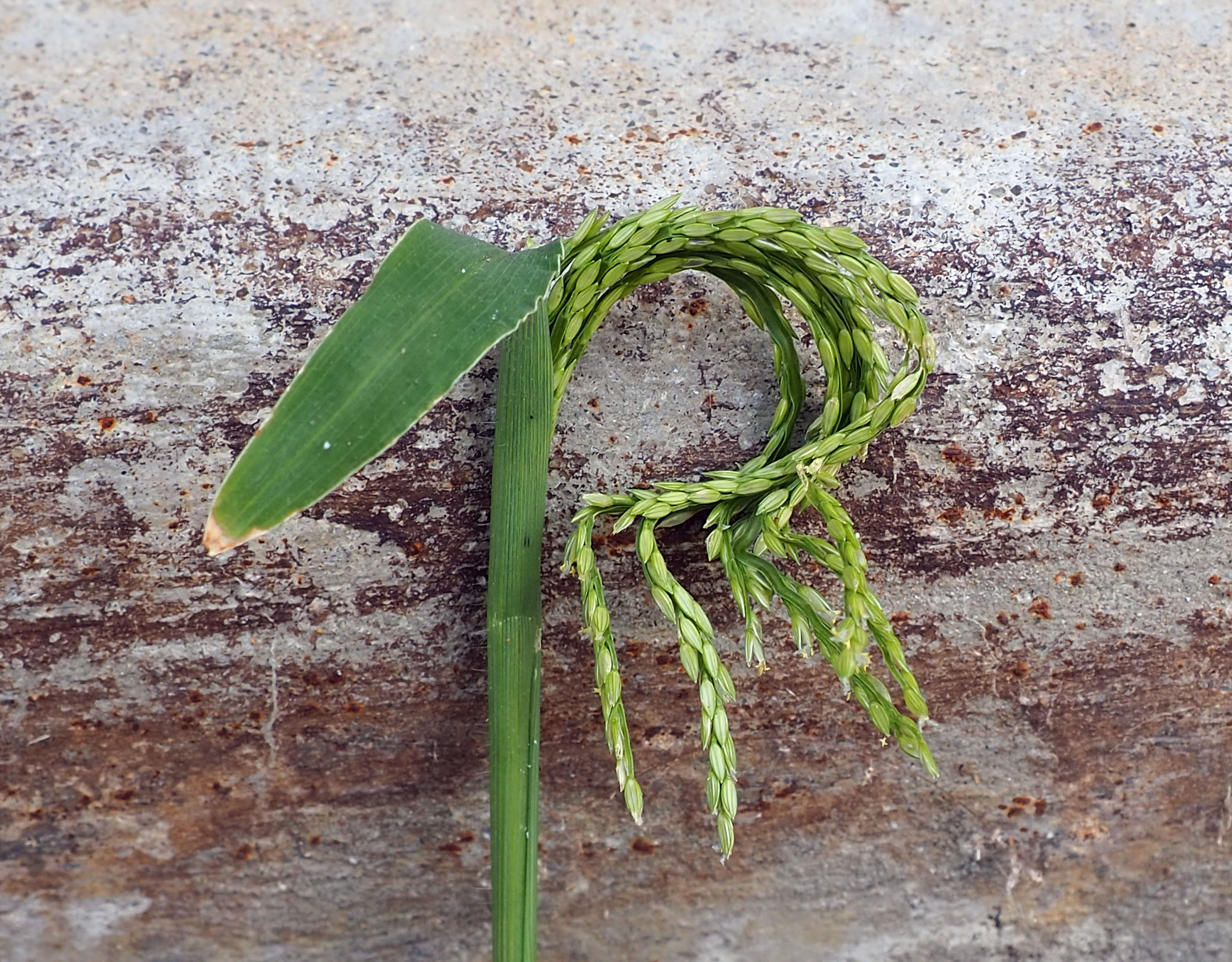
crabgrass (Digitaria sanguinalis)
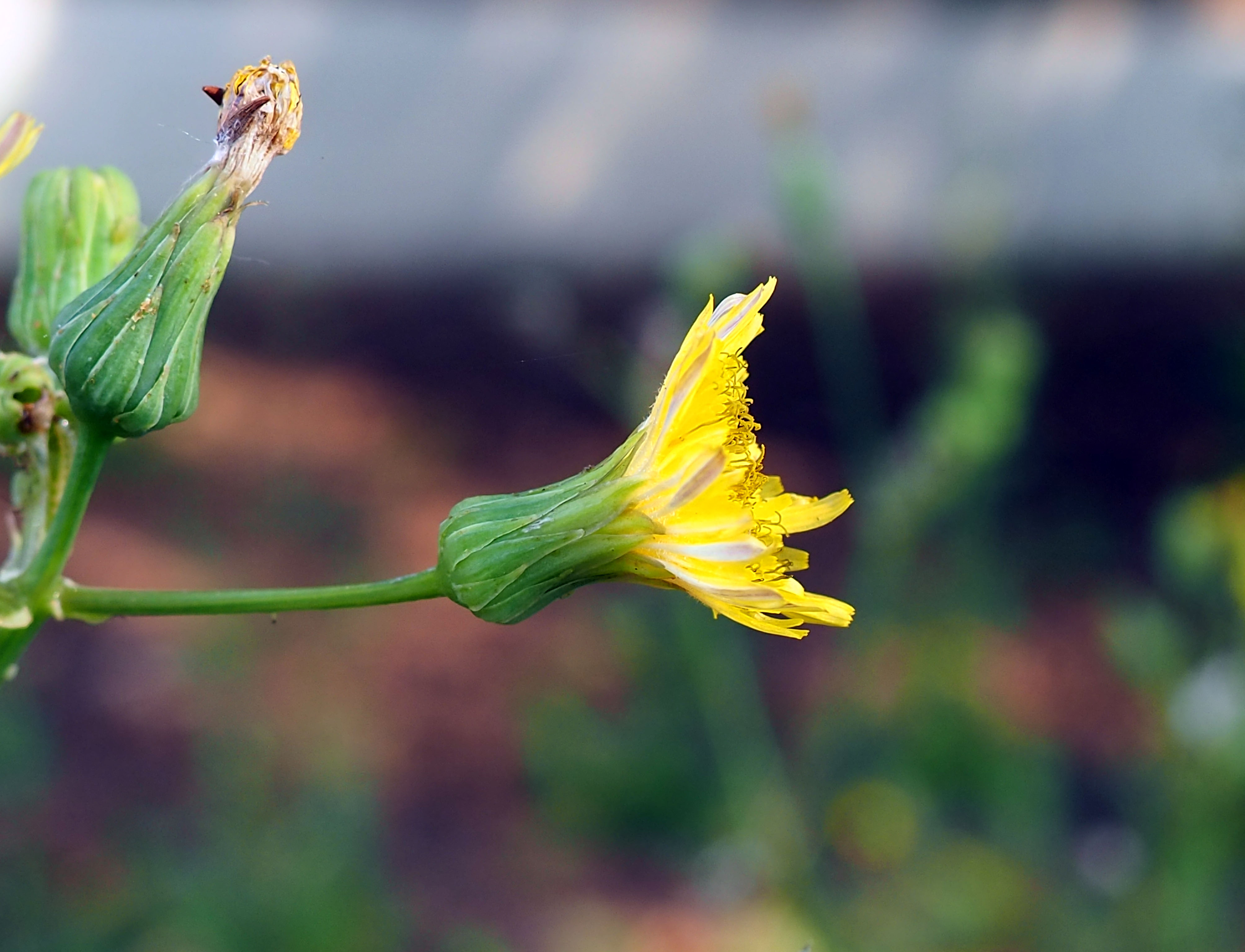
annual sow thistle (Sonchus oleraceus)
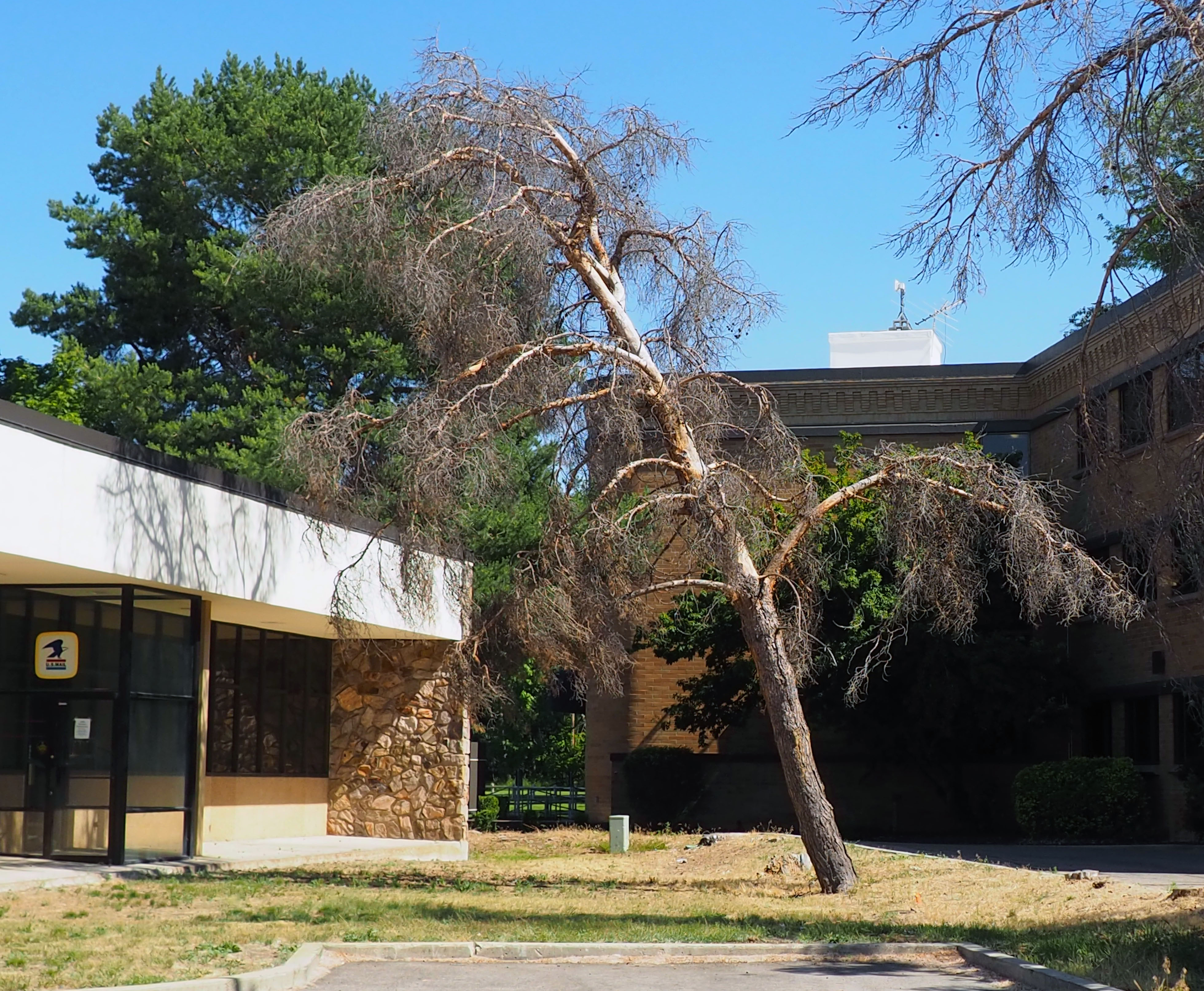
snag (aka standing dead tree) at post office on 13th Street
  • Anthriscus caucalis (bur chervil)
  • Bromus tectorum (cheatgrass)
  • Capsella bursa-pastoris (shepherd’s purse)
  • Ceratocephala testiculata (bur buttercup)
  • Chondrilla juncea (rush skeletonweed)
  • Claytonia perfoliata (miner’s lettuce)
  • Convolvulus arvensis (field bindweed)
  • Conyza canadensis (horseweed)
  • Digitaria sanguinalis (crabgrass)
  • Draba verna (spring draba)
  • Elymus repens (quackgrass)
  • Epilobium ciliatum (willowherb)
  • Erodium cicutarium (redstem filare)
  • Euphorbia maculata (spotted spurge)
  • Holosteum umbellatum (jagged chickweed)
  • Hordeum jubatum (foxtail barley)
  • Lactuca serriola (prickly lettuce)
  • Lamium amplexicaule (henbit)
  • Malva neglecta (common mallow)
  • Medicago lupulina (black medic)
  • Parthenocissus quinquefolia (Virginia creeper)
  • Poa annua (annual bluegrass)
  • Polygonum aviculare (prostrate knotweed)
  • Portulaca oleracea (purslane)
  • Senecio vulgaris (common groundsel)
  • Sonchus oleraceus (annual sow thistle)
  • Taraxacum officinale (dandelion)
  • Tragopogon dubius (salsify)
  • Tribulus terrestris (puncturevine)
  • Trifolium sp. (clover)

Where there are parking lot islands, there are bound to be weeds whether the islands are being maintained or not. What have you found growing in the parking lot islands in your city? Feel free to share in the comment section below.

Book Review: A Feast of Weeds

Since I am planning on eating more weeds, it seems appropriate that I review this book. Not to be confused with Feast of Weeds, a series of apocalyptic novels about a world-ending plague, A Feast of Weeds, by Luigi Ballerini is tangentially about foraging and cooking wild, edible plants. I say “tangentially” because it’s not like other foraging guides. This is a “literary guide,” as the subtitle states, so in the place of plant descriptions and harvesting tips, etc. are verbose and erudite essays summarizing the various literary references that each of the species profiled has accumulated from antiquity to the modern era. Apart from dozens of recipes, the information presented in this book is more entertaining than it is practical; however, when telling the stories of plants, the human element is an important facet – particularly in the stories of edible and medicinal plants – and it is the human element that this book is concerned with.
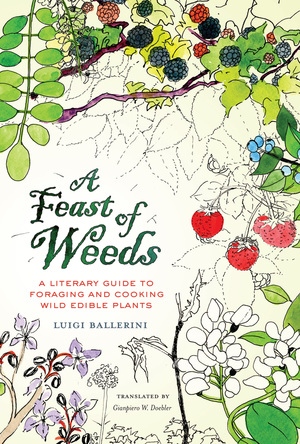
Ballerini is an Italian poet, a cooking historian, and a professor of Italian literature at UCLA. The 31 plant species he chose to profile can all be foraged in Italy (most of them in one specific region), and all except for maybe capers can be found somewhere in the United States. The majority of the plants in this book are commonly cultivated as crops, ornamentals, or landscape plants – few are truly weeds – but all of them can be found growing wild somewhere. And that’s one of Ballerini’s main points – wild food and the act of foraging is a very different experience from farmed food and the act of buying it at the grocery store. Take arugula for example:

Try making a salad with arugula that you have gathered yourself in a field and compare its taste with what you have made a hundred times with pre-washed and sterilized arugula bought at the supermarket or even at a farmers’ market. It’s easy to predict the comment that will immediately come to your lips: ‘There’s no comparison.’

A selection of recipes accompanies each of the plants that Ballerini writes about. These recipes were “invented or elaborated” by Ada De Santis, who lives on a farm in the “heel of Italy” and who “enthusiastically agreed to divulge the secrets of her kitchen.” Ballerini partnered with De Santis because of her Italian ancestry and her vast experience with both wild and cultivated plants.

Each chapter in the book follows the same basic format: a discussion of the myriad references a certain plant has received in various writings throughout human history, an overview of the (often bizarre) medicinal uses the plant has had throughout the centuries, and a brief statement on when to harvest the plant. References include plays, poems, songs, myths, fiction and non-fiction, religious and sacred texts, medicinal plant guides, and even artwork. Reading through the book, my interest and attention waned often, partly due to Ballerini’s way of writing and also due to my lack of familiarity (and lack of interest, frankly) with the references. But there were enough interesting bits here and there that made it worth the effort.
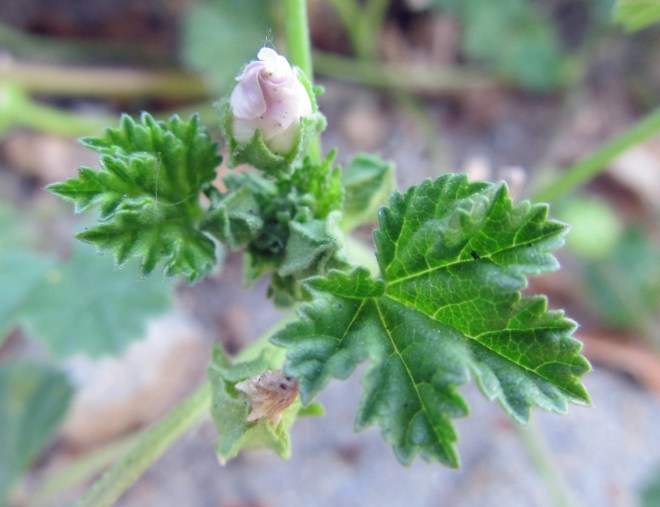
common mallow (Malva neglecta )

Of course, my interest was mainly held by the chapters about the weeds. Apparently, mallow (Malva spp.) has been written about prolifically, leading Ballerini to write, “the history of mallow is complex and contradictory, rich in illustrious testimony but, given its effects, not always very noble.” Like other plants in the book, the medicinal uses for mallow have been so numerous that it could be considered “a true cure-all,” if in fact it truly treated all the things it has been claimed to treat. On a humorous note, Ballerini writes in the chapter on wild fennel (Foeniculum vulgare), “we have come to understand … if a plant is good for you, it is good for nearly everything – but particularly for snakebite.”

Ballerini especially enjoys sharing odd medical claims, like in the chapter about sow thistle (Sonchus oleraceus), in which Nicholas Culpepper promoted some interesting uses for its juice. Purportedly, bringing it to a boil or “warming it in some bitter almond oil inside the skin of a pomegranate is a sure remedy for deafness and tinnitus.” The medicinal uses of wild chicory (Cichorium intybus) are “as old as the hills,” with a medical papyri from ancient Egypt (circa 1550 B.C.) referencing its medicinal uses among “magic formulas and spells for driving away evil-intentioned demons.”
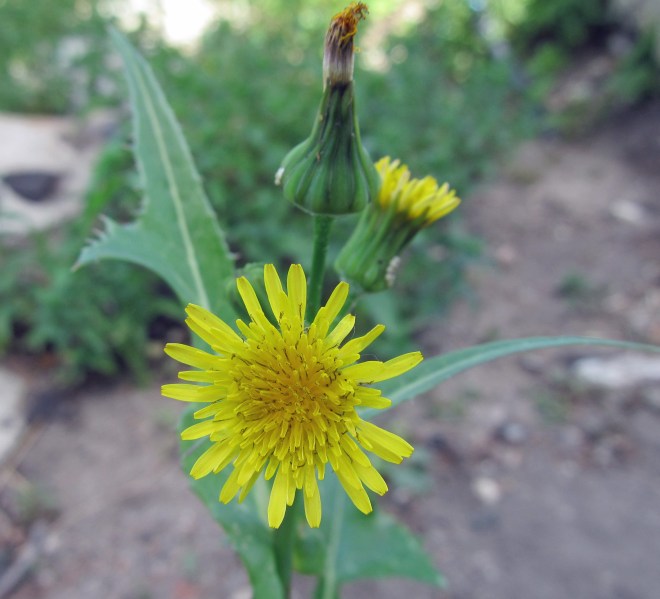
sow thistle (Sonchus sp.)

A couple of paragraphs about dandelion (Taraxacum officinale) find their way into the chapter about wild chicory. The rosettes of these two plants look similar, and the roots of both, when “roasted and ground, can be used as a substitute for coffee.” Dandelion is also known to be a diuretic, and is thus referred to as pisciailetto in Italy, pissenlit in France, and piss-a-beds in England.

Speaking of the names of things, how things came to be called what they are is a topic that Ballerini addresses frequently throughout the book. However, such origins aren’t always clear. In the chapter on wild raspberries (Rubus idaeus), Ballerini reflects on the “general uncertainty regarding the origin of the English term raspberry.” Does it originate from the Old French word rasper, the Spanish word raspar, and the Italian word raspare, all of which mean to rasp or to scrape? Ballerini laments, “this introduces very unpleasant connotations for such a delicate fruit (yet there are those who, when faced with roses always think of thorns).”

While the bulk of this book is of little use to me – I guess I’m just not that interested in classic literature or mythology – it’s worth keeping around for the recipes alone, several of which I am anxious to try. If the idea of an unconventional field guide appeals to you, this book might be up your alley, just as it apparently was for this reviewer.

Additional Book Reviews on Awkward Botany: