Another Year of Pollination: Viscin Threads

While we’re on the subject of pollen-gluing mechanisms, there is another material apart from pollenkitt that a limited number of flowering plant families use to link their pollen grains together. It functions, much like pollenkitt, by aiding in the attachment of pollen to visiting animals. However, unlike pollenkitt, it isn’t sticky, oily, or viscous, and is instead more like a series of threads. Viscin threads to be exact.

One of the major differences between pollenkitt and viscin threads is their composition. The lipid-rich coating that surrounds pollen grains, which we call pollenkitt, is derived from breakdown materials of an inner layer of the anther. It is added to pollen grains after they are formed and before the anther dehisces. Viscin threads are made up of sporopollenin, the same biopolymer that exine (the outer wall of a pollen grain) is composed of. Viscin threads have points of attachment on an outer layer of the exine called the ektexine. Unlike pollenkitt, viscin threads don’t add new color to pollen grains, nor do they contain scent compounds. Their thickness, length, abundance, and texture are dependent on the species of plant they are found on, much like pollenkitt varies in form and composition depending on species.

pollen strands of tufted evening primrose (Oenothera caespitosa)

Viscin threads evolved independently in three distantly related plant families. These include Onagraceae (the evening primrose family), Ericaceae (the heath family), and a subfamily in the pea family known as Caesalpinioideae (the peacock flower subfamily). Viscin threads are found in many, but not all, of the species in these three families. Some species in other plant families have what appear to be viscin threads but are actually ropy strands of pollenkitt, as they are composed of pollenkitt and not sporopollenin. Because they are made up of the same durable material as exine, viscin threads can be preserved in the fossil record. A paper published in Grana (1996) looked at the morphology of pollen grains with viscin threads from the Tertiary Period and concluded that “this advanced pollination syndrome using viscin threads as a pollen connecting agent” dates back to at least the Eocene and perhaps much earlier.

While pollenkitt’s stickiness adheres pollen grains together, viscin threads are more of a tangling device. Single pollen grains or pollen grain groupings called tetrads become tangled up together and then become entangled with a visiting insect, bird, or bat and carried away to a nearby flower. Disentanglement from the pollinator ideally happens when the threads are brushed against the sticky surface of a stigma. The viscin threads themselves vary by species and family. Micheal Hesse, in a paper published in Grana (1981), describes the threads in Onagraceae as “long, numerous, thin, and sculptured” with “knobs, furrows, etc.,” while those in Ericaceae are thin and smooth and those in Caesalpinioideae are thick and smooth.

smooth azalea, pink form (Rhododendron arborescens)

The length and size of tangled pollen masses also differ by species and can offer clues as to which pollinators visit which flowers. Research published in New Phytologist (2019) looked at the size of pollen thread tangles (PTT) in 13 different species of Rhododendron. They also noted which pollinators visited each species and how often they visited. The researchers found that species presenting pollen in small but abundant PTT were visited by bees, and those with large but few PTT were visited by birds and Lepidoptera (butterflies and moths). Bees also visited the flowers more frequently than birds and Lepidoptera. Bees collect and consume pollen. Between visits to anthers, they spend time grooming themselves, removing pollen clusters from their bodies and packing them into corbiculae (i.e. pollen baskets) for later*. Birds and Lepidoptera don’t groom pollen from their bodies and don’t collect it. In the authors terms, this “suggests pollinator-mediated selection on pollen packaging strategies.” Since flowers pollinated by bees lose much of their pollen in the process, they present it in smaller packages, and since flowers pollinated by birds and Lepidoptera are visited less frequently, their pollen packages are larger.

This is an example of the pollen presentation theory, and is something we will revisit as the Year of Pollination continues.

*This applies specifically to bee species that have corbiculae, and many bee species do not.
Another Year of Pollination: Pollenkitt

Pollination in flowering plants is the process of moving pollen grains, which carry sperm cells, from the anthers to the stigmas of either the same flower or a separate flower. If things go well from there, sperm cells will be transported via pollen tubes into the ovaries where fertilization with egg cells can take place and seeds can form. Pollen grain development occurs within the anthers, and by the time the anthers dehisce – or split open – they are ready for transport.

In order to protect the enclosed sperm cells and aid in their movement, pollen grains consist of a series of layers that, among other things, help ensure safe travel. Two major layers are an internal layer called intine, composed largely of cellulose, and an external layer called exine, composed mainly of sporopollenin (a highly durable and complex biopolymer). In many flowering plants, especially those that rely on animals to help carry their pollen, an additional outer layer called pollenkitt is added to the pollen grains before anthers dehisce.

three different pollen grains (image credit: wikimedia commons/Asja Radja)

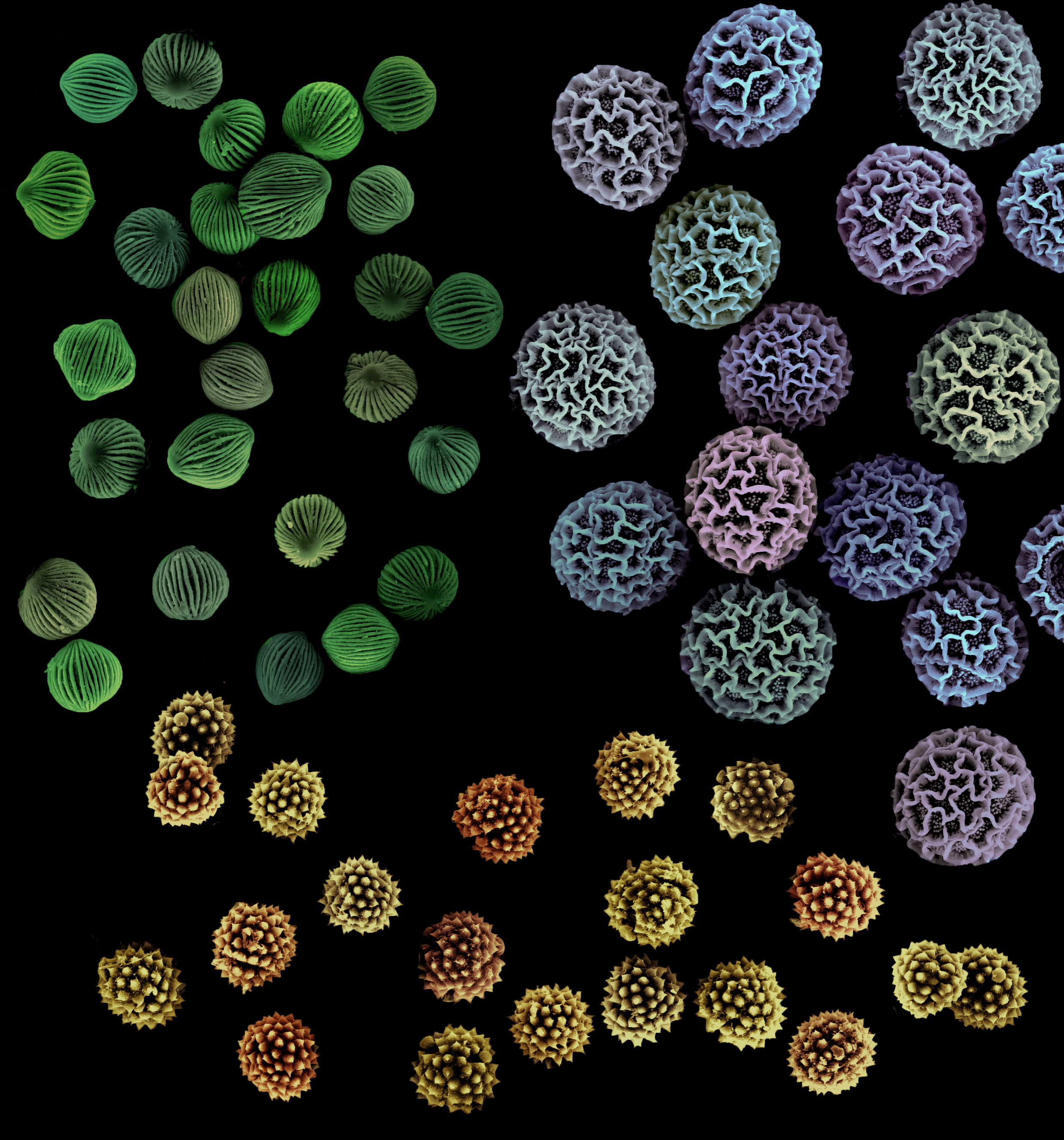
Pollenkitt is an oily, viscous, hydrophobic layer composed of lipids, carotenoids, flavonoids, proteins, and carbohydrates derived from the breakdown of an internal layer of the anther called the tapetum. Pollenkitt forms a sticky layer around the pollen grains and can add color to the pollen other than the typical yellow. The thickness of the pollenkitt and its composition is species specific. In fact, the look, size, and shape of pollen grains themselves are unique to each species and can even be used to help identify plants. Pollenkitt is found in almost all families of flowering plants and is particularly prevalent in species that are animal-pollinated. One exception is the mustard family (Brassicaceae), whose pollen grains are coated in a substance known as tryphine, which functions similar to pollenkitt but whose formation and composition differ enough to be considered separately.

dandelion pollen (image credit: wikimedia commons/Captainpixel)

The sticky nature of pollenkitt has numerous functions. For one, it helps pollen grains remain on anthers until an animal comes along to remove them. It also holds pollen grains together in clumps, helps pollen grains stick to insect (and other animal) pollinators during transport, and helps adhere them to stigmas when deposited. A paper published in Flora (2005) lists twenty possible functions for pollenkitt, many of which have been confirmed in certain species and some of which are hypothetical. In addition to functions having to do with pollen movement and placement, pollenkitt may also provide protection from water loss, UV radiation, and fungal and bacterial invasions. In species where pollen is offered as food to pollinating insects, pollenkitt is a more easily digestible food source than the pollen grain itself. Thanks to carotenoids, pollenkitt can make pollen more colorful, which may help attract pollinating insects, or, depending on the color, can also hide pollen from insect visitors.

Another important function of pollenkitt is to give pollen a scent. Odors can help encourage insect visitors or deter them, so depending on the situation, scented pollenkitt may be attracting pollinators or discouraging pollen consumers. In a study published in American Journal of Botany (1988), Heidi Dobson analyzed the chemical composition of 69 different species of flowering plants. She isolated numerous scent compounds in pollenkitt and suggested that “some of the chemicals in pollenkitt may … serve as identification cues to pollen-foraging bees.” Most of the species she analyzed were pollinated by bees (which consume pollen), but the few that were mainly pollinated by hummingbirds and butterflies tended to have fewer scent compounds. Since birds and butterflies are there for the nectar and not the pollen, it would make sense that the pollen of these plant species wouldn’t need to carry a scent.

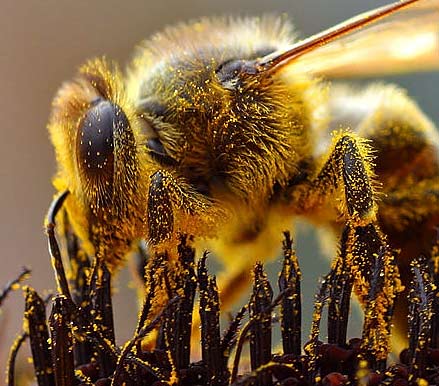
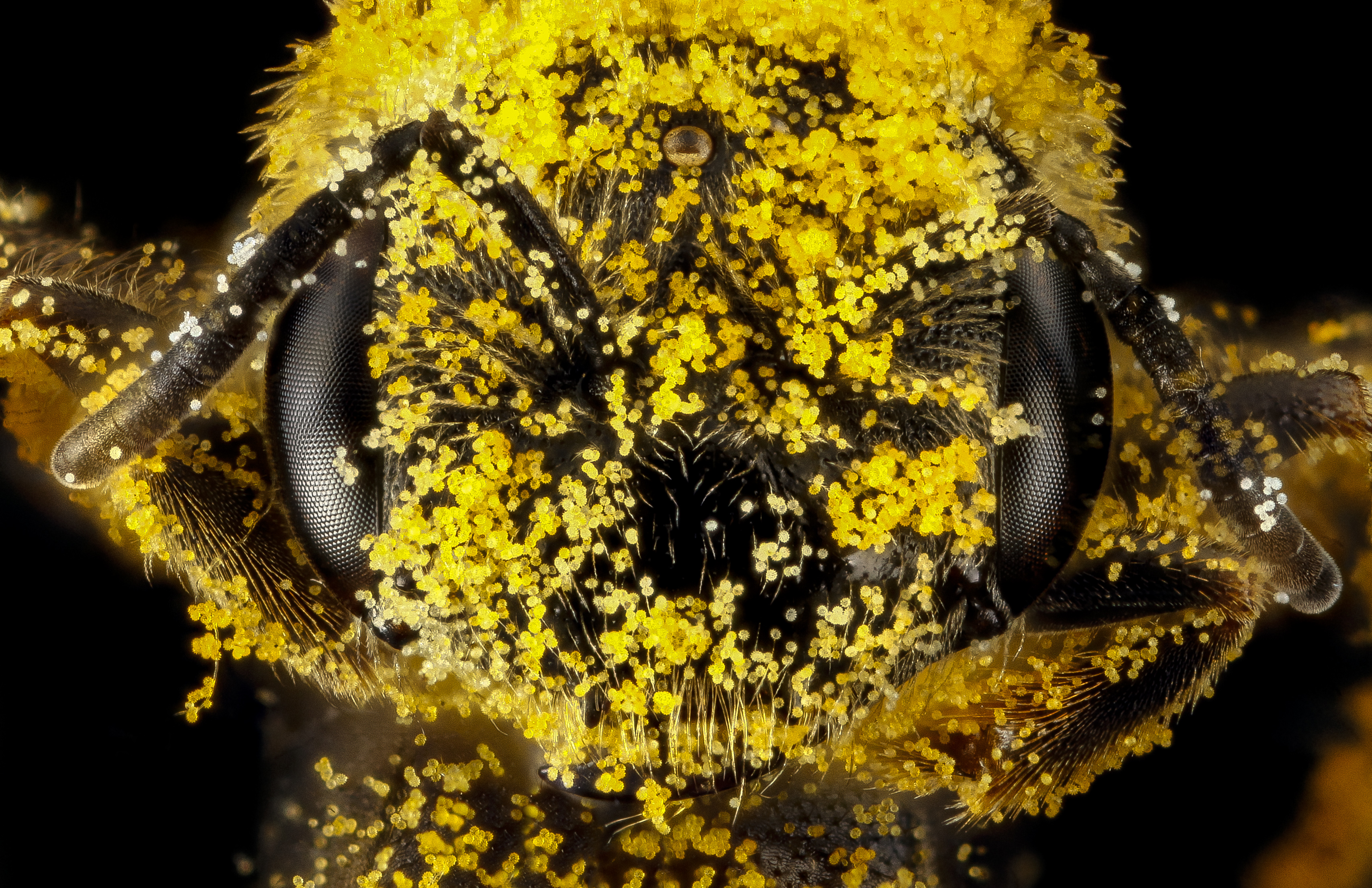
bee collecting pollen (image credit: wikimedia commons)

In flowers that are wind-pollinated, the pollenkitt layer is either very thin or absent altogether. In this case, pollen grains need to be easily released from the anther and are better off when they aren’t sticking to other pollen grains. That way, they are free to be carried off in the breeze to nearby flowers. Some plant species are amphiphilous, meaning they can be both animal-pollinated and wind-pollinated, and according to the authors of the paper published in Flora (2005), pollenkitt layers in these species exhibit intermediate characteristics of both types of pollen grains, generally with thinner, less-sticky pollenkitt and more pollenkitt found within the cavities of the exine.

It’s clear that this unique pollen-glueing substance plays a critical role in the pollination process for many plant species. Considering that each species of plant has its own story to tell, there is still more to learn about the forms and functions that pollenkitt takes.

———–

This is the first in a series of posts in 2024 in which, once again, I am exploring the world of pollinators and pollination. You can read more about this effort in last month’s Year in Review post.

A Few Fun Facts About Pollen

Sexual reproduction in vascular plants requires producing and transporting pollen grains – the male gametophytes or sperm cells of a plant. These reproductive cells must make their way to the egg cells in or order to form seeds – plants in embryo. The movement of pollen is something we can all observe. It’s happening all around us on a regular basis. Any time a seed-bearing plant (also known as a spermatophyte) develops mature cones or flowers, pollen is on the move. Pollen is a ubiquitous and enduring substance and a fascinating subject of study. In case you don’t believe me, here are a few fun facts.

Bee covered in pollen – photo credit: wikimedia commons

Pollen is as diverse as the species that produce it. Pollen grains are measured in micrometers and are so tiny that the only reason we can see them with the naked eye is because they are often found en masse. Yet they are incredibly diverse in size, shape, and texture, and each plant species produces its own unique looking pollen. With the help of a good microscope, plants can even be identified simply by looking at their pollen. See images of the pollen grains of dozens of plant species here and here.

Pollen helps us answer questions about the past. Because pollen grains are so characteristic and because their outer coating (known as exine) is so durable and long-lasting, studying pollen found in sediments and sedimentary rocks helps us discover all sorts of things about deep time. The study of pollen and other particulates is called palynology. Numerous disciplines look to palynology to help them answer questions and solve mysteries. Its even used in forensics to help solve crimes. Criminals should be aware that brushing up against a plant in bloom may provide damning evidence.

Pollen oddities. While all pollen is different, some plants produce particularly unique pollen. The pollen grains of plants in the orchid and milkweed families, for example, are formed into united masses called pollinia. Each pollinium is picked up by pollinators and transferred to the stigmas of flowers as a single unit. A number of other species produce other types of compound pollen grains. The pollen grains of pines and other conifers are winged, and the pollen grains of seagrass species, like Zostera spp., are filamentous and said to hold the record for longest pollen grains.

The pollinia of milkweed (Asclepias spp.) look like the helicopter-esque fruits of maple trees. photo credit: wikimedia commons

Pollen tube oddities. In flowering plants, when pollen grains reach the stigma of a compatible flower, a vegetative cell within the grain forms a tube in order to transport the regenerative cells into the ovule. This tube varies in length depending on the length of the flower’s style. Because corn flowers produce such long styles (also know as corn silk), corn pollen grains hold the record for longest pollen tube, which can measure 12 inches or more. Species found in the mallow, gourd, and bellflower families produce multiple pollen tubes per pollen grain. Hence, their pollen is said to be polysiphonous.

Pollen is transported in myriad ways. Plants have diverse ways of getting their pollen grains where they need to be. Anemophilous plants rely on wind and gravity. They produce large quantities of light-weight pollen grains that are easily dislodged. Most of this pollen won’t make it, but enough of it will to make this strategy worth it. Hydrophilous plants use water and, like wind pollinated plants, may produce lots of pollen due to the unpredictably of this method. Some hydrophilous plants transport their pollen on the surface of the water, while others are completely submerged during pollination.

Employing animals to move pollen is a familiar strategy. Entomophily (insect pollination) is the most common, but there is also ornithophily (bird pollination) and chiropterophily (bat pollination), among others. Plants that rely on animals for pollination generally produce pollen grains that are sticky and nutritious. They attract animals using showy flowers, fragrance, and nectar. The bodies of pollinating insects have modifications that allow them to collect and transport pollen. Certain bees, like honey bees and bumblebees, have pollen baskets on their hind legs, while other bees have modified hairs called scopae on certain parts of their bodies.

Pollen is edible. Some animals – both pollinating and non-pollinating – use pollen as a food source. Animals that eat pollen are palynivores. Bees, of course, eat pollen, but lots of other insects do, too. Even some spiders, which are generally thought of as carnivores, have been observed eating pollen that gets trapped in their webs.

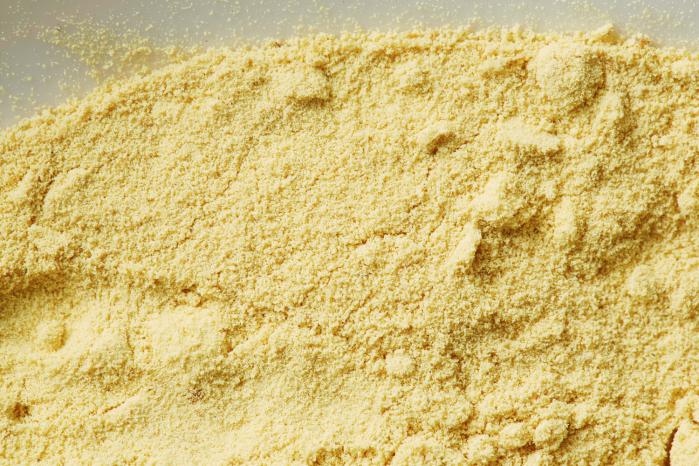
Pollen is thought to be highly nutritious for humans as well, and so, along with being taken as a supplement, it is used in all sorts of food products. To collect pollen, beekeepers install pollen traps on their beehives that strip incoming worker bees of their booty. Pollen from various wind pollinated plants, like cattails and pine trees, are also collected for human consumption. For example, a Korean dessert called dasik is made using pine pollen.

pine pollen – photo credit: wikimedia commons

Pollen makes many people sick. Hay fever is a pretty common condition and is caused by an allergy to wind-borne pollen. This condition is also known as pollinosis or allergic rhinitis. Not all flowering plants are to blame though, so here is a list of some of the main culprits. Because so many people suffer from hay fever, pollen counts are often included in weather reports. Learn more about what those counts mean here.

Related Posts: 

Year of Pollination: Botanical Terms for Pollination, part one

When I began this series of posts, I didn’t have a clear vision of what it would be. I had a budding interest in pollination biology and was anxious to learn all that I could. I figured that calling 2015 the “Year of Pollination” and writing a bunch of pollination-themed posts would help me do that. And it has. However, now that the year is coming to a close, I realize that I neglected to start at the beginning. Typical me.

What is pollination? Why does it matter? The answers to these questions seemed pretty obvious; so obvious, in fact, that I didn’t even think to ask them. That being said, for these last two “Year of Pollination” posts (and the final posts of the year), I am going back to the basics by defining pollination and exploring some of the terms associated with it. One thing is certain, there is still much to be discovered in the field of pollination biology. Making those discoveries starts with a solid understanding of the basics.

Pollination simply defined is the transfer of pollen from an anther to a stigma or – in gymnosperms – from a male cone to a female cone. Essentially, it is one aspect of plant sex, albeit a very important one. Sexual reproduction is one way that plants multiply. Many plants can also reproduce asexually. Asexual reproduction typically requires less energy and resources – no need for flowers, pollen, nectar, seeds, fruit, etc. – and can be accomplished by a single individual without any outside help; however, there is no gene mixing (asexually reproduced offspring are clones) and dispersal is limited (consider the “runners” on a strawberry plant producing plantlets adjacent to the mother plant).

To simplify things, we will consider only pollination that occurs among angiosperms (flowering plants); pollination/plant sex in gymnosperms will be discussed at another time. Despite angiosperms being the youngest group of plants evolutionarily speaking, it is the largest group and thus the type we encounter most.

A flower is a modified shoot and the reproductive structure of a flowering plant. Flowers are made up of a number of parts, the two most important being the reproductive organs. The androecium is a collective term for the stamens (what we consider the male sex organs). A stamen is composed of a filament (or stalk) topped with an anther – where pollen (plant sperm) is produced. The gynoecium is the collective term for the pistil (what we consider the female sex organ). This organ is also referred to as a carpel or carpels; this quick guide helps sort that out. A pistil consists of the ovary (which contains the ovules), and a style (or stalk) topped with a stigma – where pollen is deposited. In some cases, flowers have both male and female reproductive organs. In other cases, they have one or the other.

photo credit: wikimedia commons

photo credit: wikimedia commons

When pollen is moved from an anther of one plant to a stigma of another plant, cross-pollination has occurred. When pollen is moved from an anther of one plant to a stigma of the same plant, self-pollination has occurred. Cross-pollination allows for gene transfer, and thus novel genotypes. Self-pollination is akin to asexual production in that offspring are practically identical to the parent. However, where pollinators are limited or where plant populations are small and there is little chance for cross-pollination, self-pollination enables reproduction.

Many species of plants are unable to self-pollinate. In fact, plants have evolved strategies to ensure cross-pollination. In some cases, the stamens and pistils mature at different times so that when pollen is released the stigmas are not ready to receive it or, conversely, the stigmas are receptive before the pollen has been released. In other cases, stigmas are able to recognize their own pollen and will reject it or inhibit it from germinating. Other strategies include producing flowers with stamens and pistils that differ dramatically in size so as to discourage pollen transfer, producing separate male and female flowers on the same plant (monoecy), and producing separate male and female flowers on different plants (dioecy).

As stated earlier, the essence of pollination is getting the pollen from the anthers to the stigmas. Reproduction is an expensive process, so ensuring that this sex act takes place is vital. This is the reason why flowers are often showy, colorful, and fragrant. However, many plants rely on the wind to aid them in pollination (anemophily), and so their flowers are small, inconspicuous, and lack certain parts. They produce massive amounts of tiny, light-weight pollen grains, many of which never reach their intended destination. Grasses, rushes, sedges, and reeds are pollinated this way, as well as many trees (elms, oaks, birches, etc.) Some aquatic plants transport their pollen from anther to stigma via water (hydrophily), and their flowers are also simple, diminutive, and produce loads of pollen.

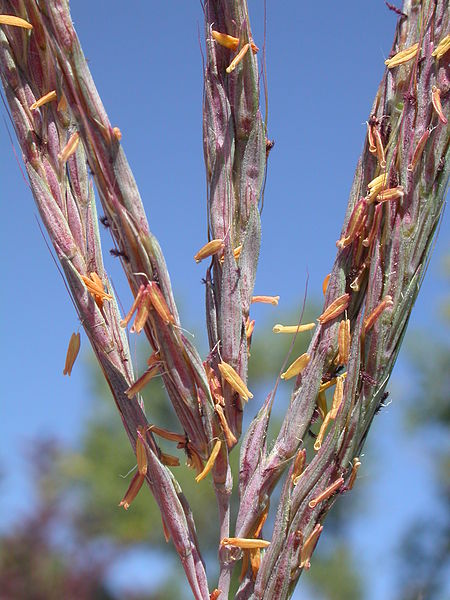
Inforescence of big bluestem (Andropogon gerardii), a wind pollinated plant - pohto credit: wikimedia commons

Inflorescence of big bluestem (Andropogon gerardii), a wind pollinated plant – photo credit: wikimedia commons

Plants that employ animals as pollinators tend to have flowers that we find the most attractive and interesting. They come in all shapes, sizes, and colors and are anywhere from odorless to highly fragrant. Odors vary from sweet to bitter to foul. Many flowers offer nectar as a reward for a pollinator’s service. The nectar is produced in special glands called nectaries deep within the flowers, inviting pollinators to enter the flower where they can be dusted with pollen. The reward is often advertised using nectar guides – patterns of darker colors inside the corolla that direct pollinators towards the nectar. Some of these nectar guides are composed of pigments that reflect the sun’s ultraviolet light – they are invisible to humans but are a sight to behold for many insects.

In part two, we will learn what happens once the pollen has reached the stigma – post-pollination, in other words. But first, a little more about pollen. The term pollen actually refers to a collection of pollen grains. Here is how Michael Allaby defines “pollen grain” in his book The Dictionary of Science for Gardeners: “In seed plants, a structure produced in a microsporangium that contains one tube nucleus and two sperm nuclei, all of them haploid, enclosed by an inner wall rich in cellulose and a very tough outer wall made mainly from sporopollenin. A pollen grain is a gametophyte.”

A pollen grain’s tough outer wall is called exine, and this is what Allaby has to say about that: “It resists decay, and the overall shape of the grain and its surface markings are characteristic for a plant family, sometimes for a genus or even a species. Study of pollen grains preserved in sedimentary deposits, called palynology or pollen analysis, makes it possible to reconstruct past plant communities and, therefore, environments.”

Scanning electron microscope image of pollen grains from narrowleaf evening primrose (Oenothera fruticosa) - photo credit: wikimedia commons

Scanning electron microscope image of pollen grains from narrowleaf evening primrose (Oenothera fruticosa) – photo credit: wikimedia commons