
Flowers in the aster family have one of the most recognizable shapes in botany – a circle with a series of petals surrounding it. If you were asked to draw a flower, there is a good chance your drawing would look something like a sunflower, a daisy, a cosmos, or an aster. It’s one of the most basic flower shapes, and yet it isn’t a single flower; it’s a pseudanthium – a false flower. This is because what might appear as a single flower is actually a collection of tens, hundreds, or even thousands of tiny flowers. This aggregation of flowers into a single compact unit is the reason the family was once given the name Compositae, and even now is often informally referred to as the composites.
Another reason why a flower in the aster family – or Asteraceae – might be the first thing you would draw is because it is the largest family of flowering plants, numbering up to 33,000 species worldwide. Chances are you’ve seen a few of them around. In the contiguous U.S. alone, there are more than 2400 species, and that doesn’t include the plethora of species brought in from regions across the world either intentionally (to be grown in our gardens) or unintentionally (as weeds). Of course, not all of the species in this family are going to have a typical sunflower-like flower head, but they do all have a specific type of inflorescence called a capitulum. Capitula are made up of densely packed, miniature flowers called florets, which are stalkless (or sessile) and arranged on a flattened central stem (or axis). There are at least four different types of florets in the aster family, but we’ll leave that discussion for another time.
In this post, we’re specifically interested in what is happening at the base or underside of the capitulum. All of the florets in a capitulum are held within a cup or bowl-shaped series of bracts called an involucre. Bracts are modified leaves, and this whorl of tightly held or loosely arranged bracts are initially found surrounding a developing flower bud. As the inflorescence opens, the involucre opens as well and its bracts persist at the base of the flower head. The bracts that make up the involucre are called phyllaries, and they vary in shape, number, and size depending on plant species. In fact, the features of phyllaries are so unique they are often relied on to help identify a plant in the aster family to genus, species, and infraspecies (variety, subspecies, etc.).
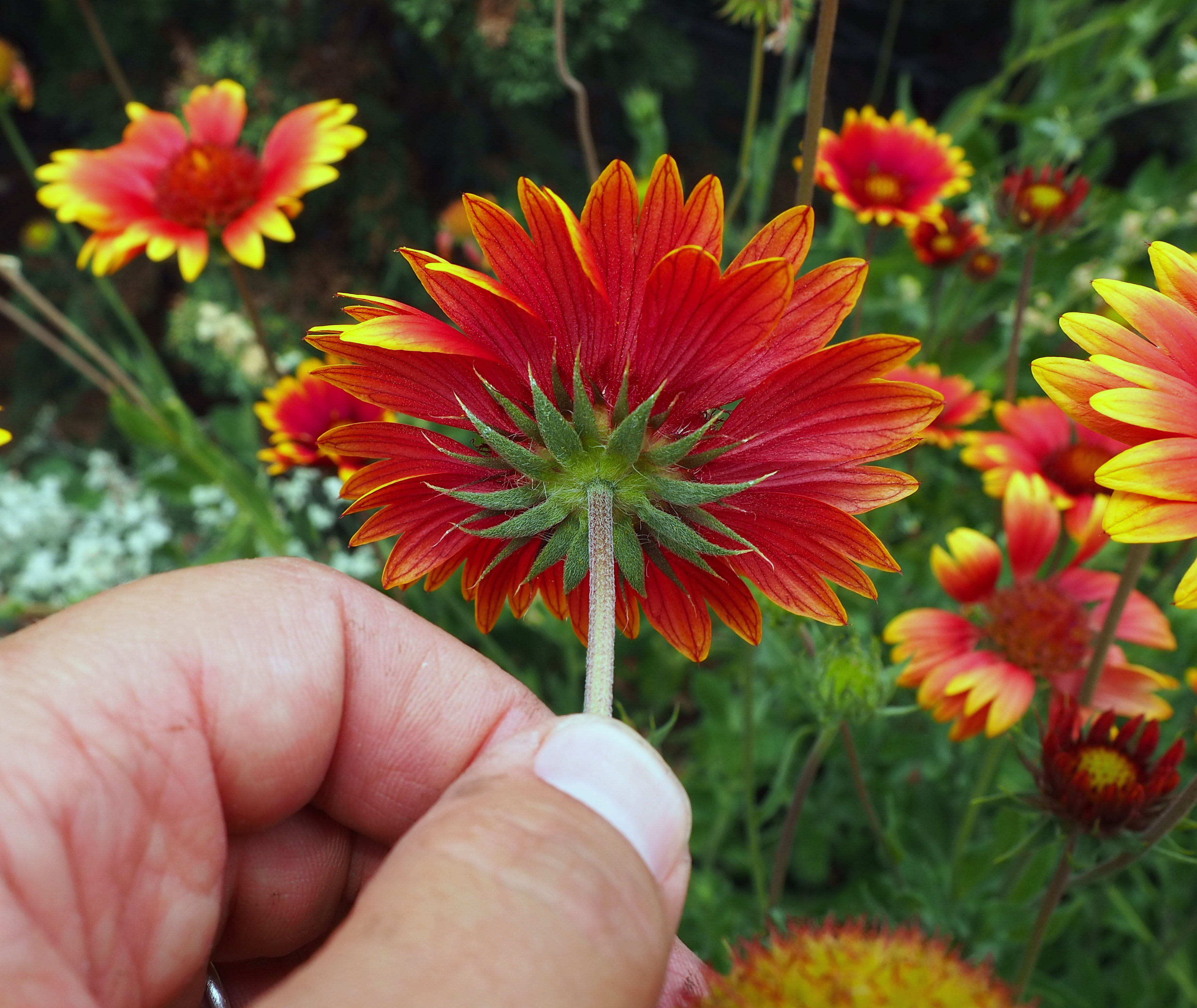
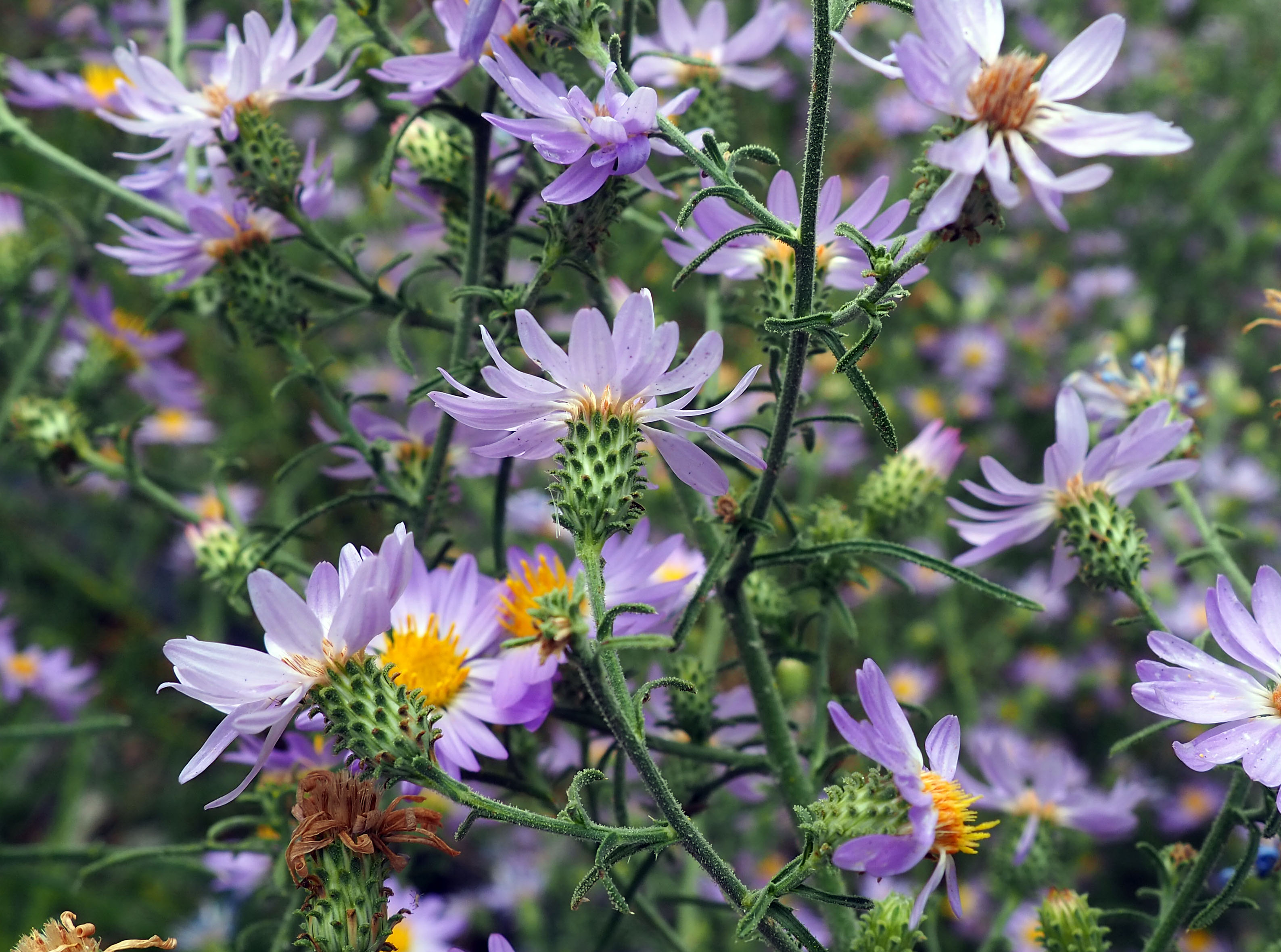
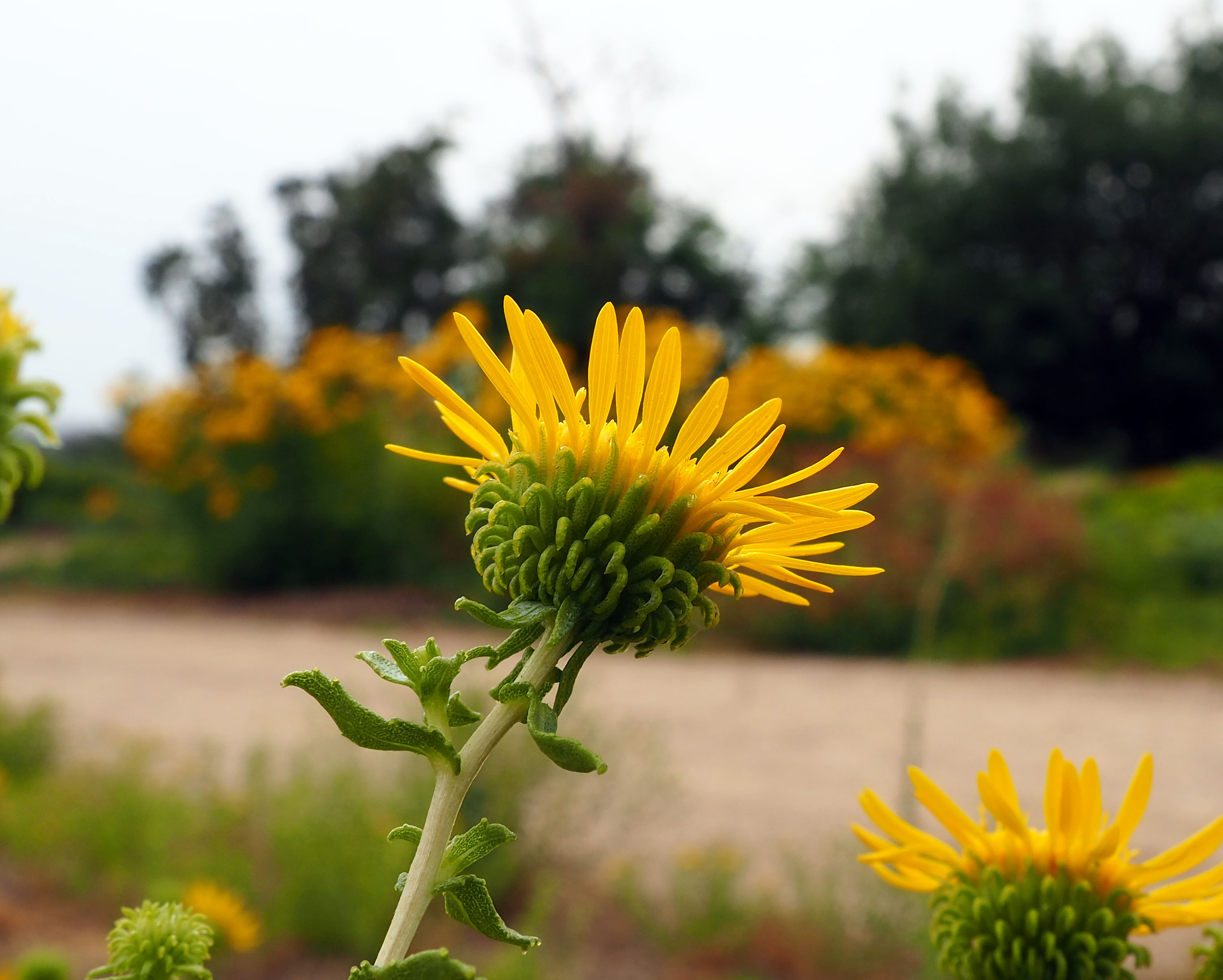
When it comes to flowers in the aster family, there is more than meets the eye. After you take some time to appreciate the intricate beauty of its collection of florets, turn the flower head over and take in its phyllaries. They come in various colors, they can be hairy or smooth, their margins can be entire or adorned with hairs, teeth, etc., they can be flat and straight or they can curve outwards in interesting ways, their tips can be pointed, spine-tipped, rounded, or keel shaped. Phyllaries can be laid out very evenly, tightly overlapping each other like shingles on a roof (i.e. imbricate) or their arrangement can be slightly uneven and irregular (i.e. subimbricate). Use a hand lens to get a closer look at all of these features. As you get in the habit of observing the details of the involucre and its phyllaries, chances are each time you come across a flower in the aster family, you’ll find yourself flipping it over to get a look at its undercarriage. What will you find?



If phyllaries have piqued your interest and you’d like to learn more about plants in the family Asteraceae, I highly recommend getting your hands on the book, The Sunflower Family by Richard Spellenberg and Naida Zucker. It has a North American focus, but it’s a great place to start learning more about this massive plant family.


 awkward botany