
Despite being such a widely distributed and commonly occurring plant, Anaphalis margaritacea is, in many other ways, an uncommon species. Its native range spans North America from coast to coast, reaching up into Canada and down into parts of Mexico. It is found in nearly every state in the United States, and it even occurs throughout northeast Asia. Apart from that, it is cultivated in many other parts of the world and is “weedy” in Europe. Its cosmopolitan nature is due in part to its preference for sunny, dry, well-drained sites, making it a common inhabitant of open fields, roadsides, sandy dunes, rocky slopes, disturbed sites, and waste places.
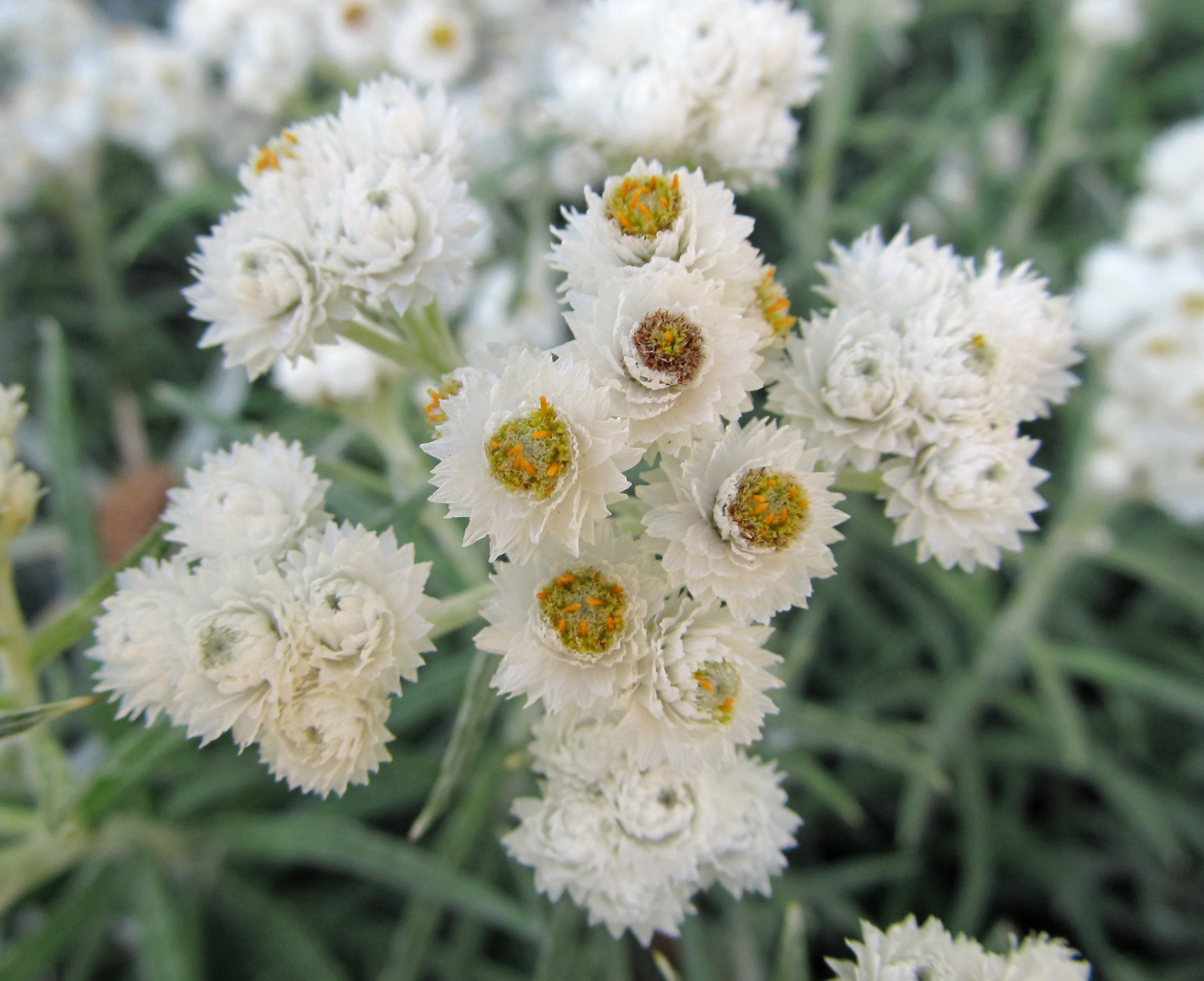
Its common name, pearly everlasting, refers to its unique inflorescence. Clusters of small, rounded flower heads occur in a corymb. “Pearly” refers to the collection of white bracts, or involucre, that surround each flower head. Inside the bracts are groupings of yellow to brown disc florets. The florets are unisexual, which is unusual for plants in the aster family. Plants either produce all male flowers or all female flowers (although some female plants occasionally produce florets with male parts). Due to the persistent bracts, the inflorescences remain intact even after the plant has produced seed. This quality has made them a popular feature in floral arrangements and explains the other half of the common name, “everlasting.” In fact, even in full bloom, the inflorescences can have a dried look to them.
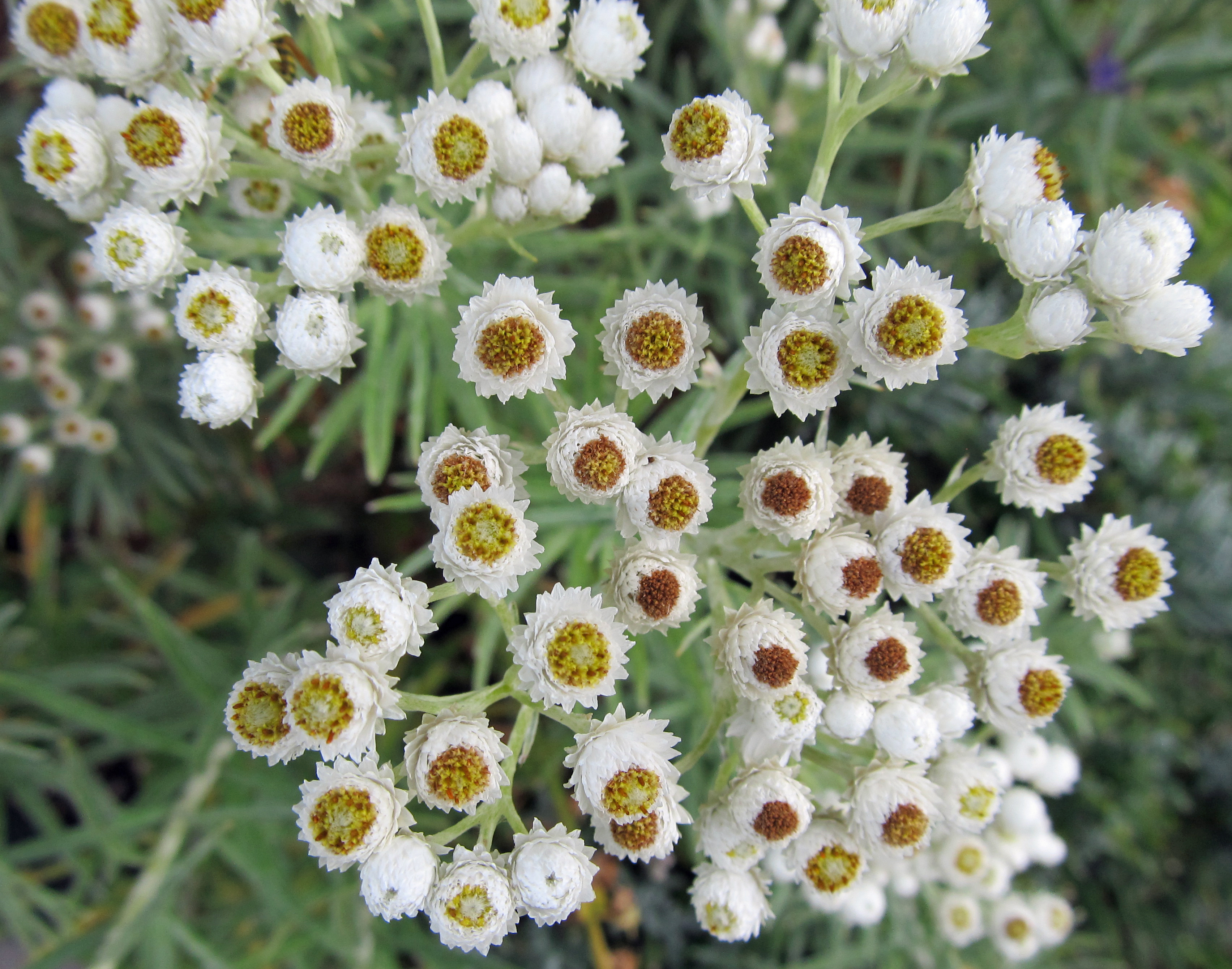
Pearly everlasting grows from 1 to 3 feet tall. Flowers are borne on top of straight stems that are adorned with narrow, alternately arranged, lance-shaped leaves. Stems and leaves are gray-green to white. Stems and undersides of leaves are thickly covered in very small hairs. Apart from contributing to its drought tolerance, this woolly covering deters insects and other animals from consuming its foliage. In The Book of Field and Roadside, John Eastman writes, “Insect foliage feeders are not numerous on this plant, owing to its protective downy ‘gloss.’ … The plant’s defensive coat seems to prevent spittlebug feeding on stem and underleaves. The tomentum also discourages ant climbers and nectar robbers.”
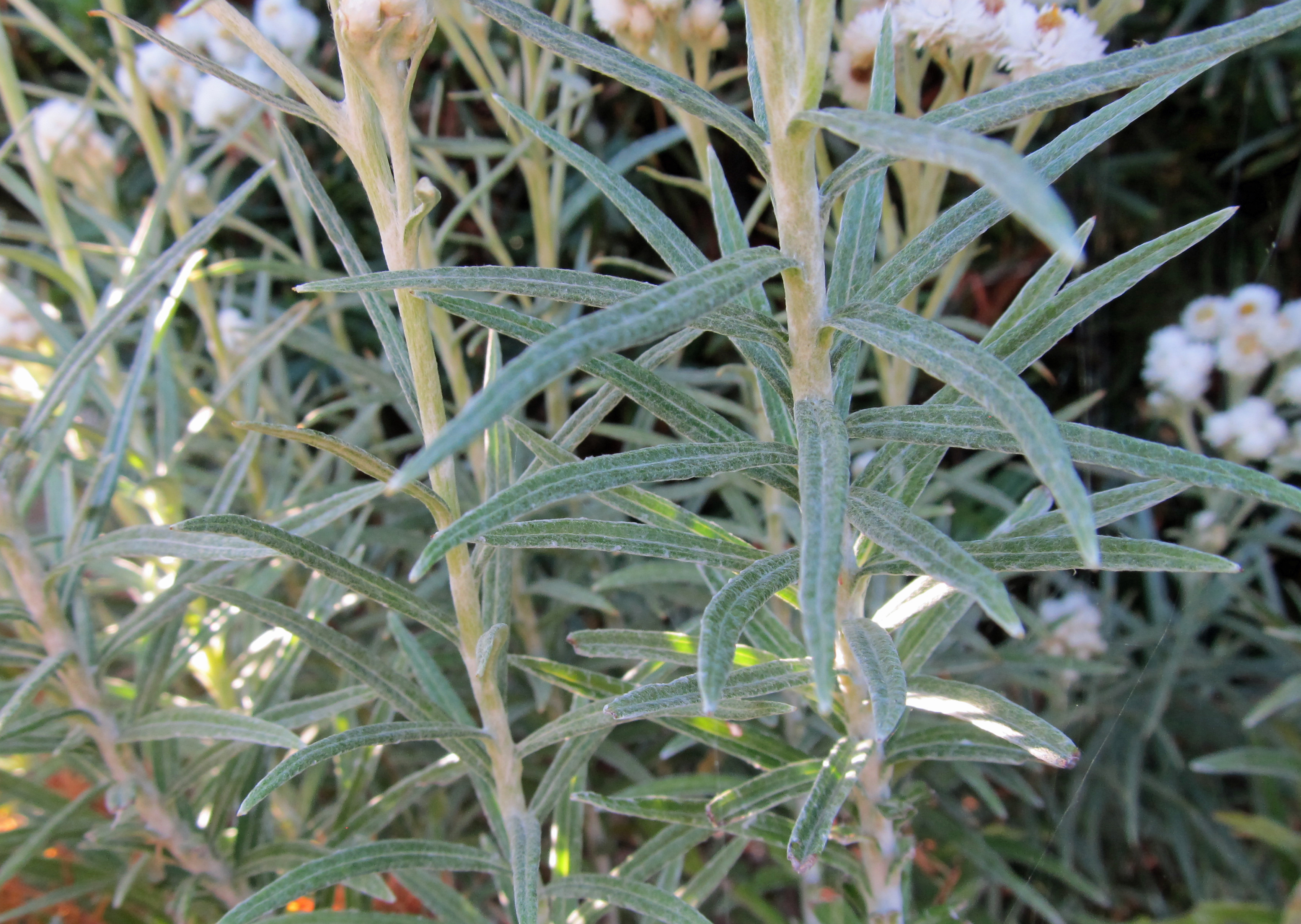
Not all insects are thwarted however, as Anaphalis is a host to the caterpillars of at least two species of painted lady butterflies (Vanessa virginiensis and V. cardui). Its flowers, which occur throughout the summer and into the fall. are visited by a spectrum of butterflies, moths, bees, and flies.
Because the plants produce either male or female flowers, cross-pollination between plants is necessary for seed development. However, plants also reproduce asexually via rhizomes. Extensive patches of pearly everlasting can be formed this way. Over time, sections of the clonal patch can become isolated from the mother plant, allowing the plant to expand its range even in times when pollinators are lacking.
The attractive foliage and unique flowers are reason enough to include this plant in your dry garden. The flowers have been said to look like eye balls, fried eggs, or even, as Eastman writes, “white nests with a central yellow clutch of eggs spilling out.” However you decide to describe it, this is a tough and beautiful plant deserving of a place in the landscape.
Read more:
- USDA Forest Service: Pearly Everlasting
- Ladybird Johnson Wildflower Center: Anaphalis margaritacea
- In Defense of Plants: Pearly Everlasting
Photos in this post are of Anaphalis margaritacea ‘Neuschnee’ and were taken at Idaho Botanical Garden in Boise, Idaho.
 awkward botany