Randomly Selected Botanical Terms: Phyllaries

Flowers in the aster family have one of the most recognizable shapes in botany – a circle with a series of petals surrounding it. If you were asked to draw a flower, there is a good chance your drawing would look something like a sunflower, a daisy, a cosmos, or an aster. It’s one of the most basic flower shapes, and yet it isn’t a single flower; it’s a pseudanthium – a false flower. This is because what might appear as a single flower is actually a collection of tens, hundreds, or even thousands of tiny flowers. This aggregation of flowers into a single compact unit is the reason the family was once given the name Compositae, and even now is often informally referred to as the composites.

Another reason why a flower in the aster family – or Asteraceae – might be the first thing you would draw is because it is the largest family of flowering plants, numbering up to 33,000 species worldwide. Chances are you’ve seen a few of them around. In the contiguous U.S. alone, there are more than 2400 species, and that doesn’t include the plethora of species brought in from regions across the world either intentionally (to be grown in our gardens) or unintentionally (as weeds). Of course, not all of the species in this family are going to have a typical sunflower-like flower head, but they do all have a specific type of inflorescence called a capitulum. Capitula are made up of densely packed, miniature flowers called florets, which are stalkless (or sessile) and arranged on a flattened central stem (or axis). There are at least four different types of florets in the aster family, but we’ll leave that discussion for another time.

In this post, we’re specifically interested in what is happening at the base or underside of the capitulum. All of the florets in a capitulum are held within a cup or bowl-shaped series of bracts called an involucre. Bracts are modified leaves, and this whorl of tightly held or loosely arranged bracts are initially found surrounding a developing flower bud. As the inflorescence opens, the involucre opens as well and its bracts persist at the base of the flower head. The bracts that make up the involucre are called phyllaries, and they vary in shape, number, and size depending on plant species. In fact, the features of phyllaries are so unique they are often relied on to help identify a plant in the aster family to genus, species, and infraspecies (variety, subspecies, etc.).
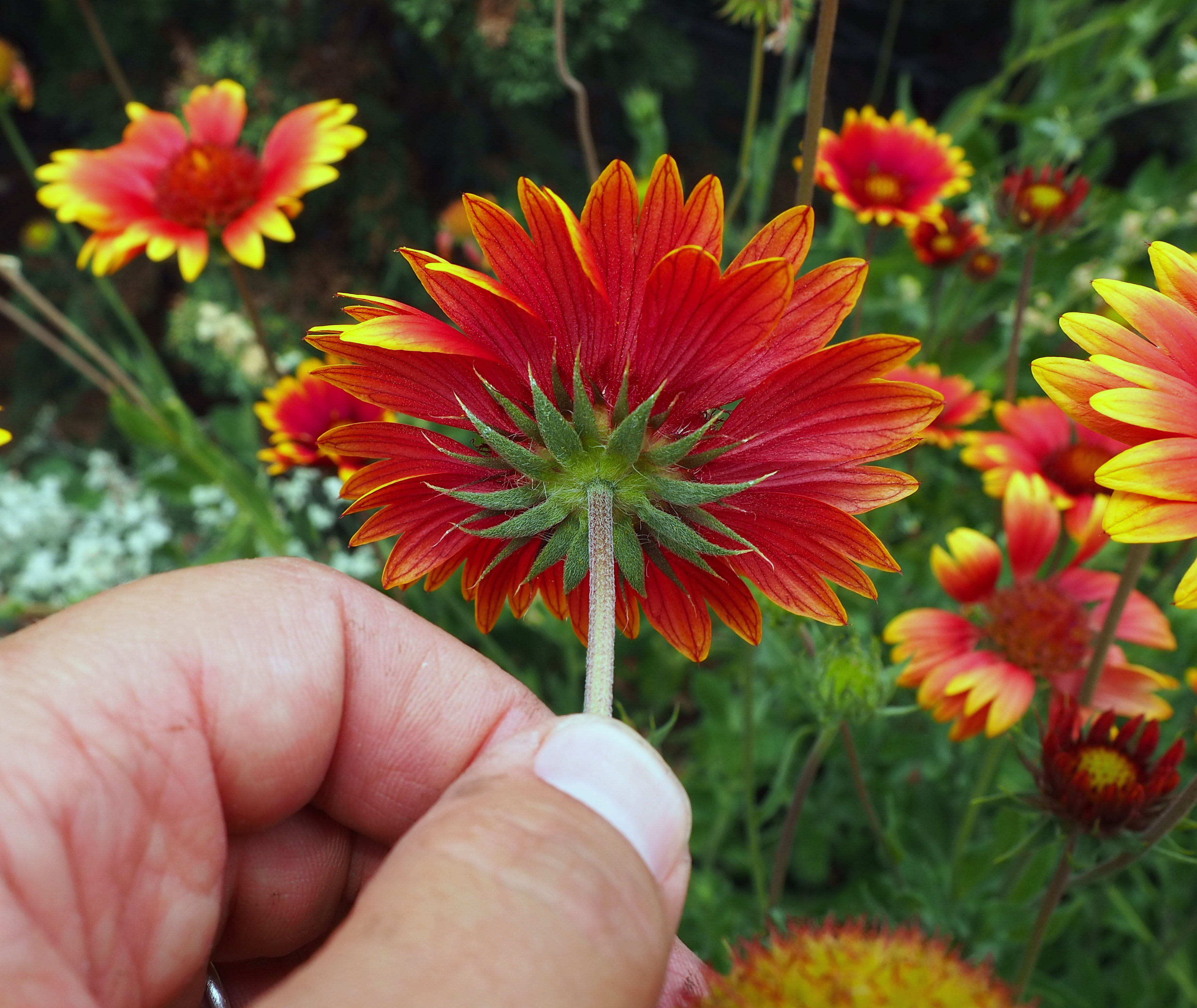
phyllaries of blanketflower (Gaillardia aristata)

When it comes to flowers in the aster family, there is more than meets the eye. After you take some time to appreciate the intricate beauty of its collection of florets, turn the flower head over and take in its phyllaries. They come in various colors, they can be hairy or smooth, their margins can be entire or adorned with hairs, teeth, etc., they can be flat and straight or they can curve outwards in interesting ways, their tips can be pointed, spine-tipped, rounded, or keel shaped. Phyllaries can be laid out very evenly, tightly overlapping each other like shingles on a roof (i.e. imbricate) or their arrangement can be slightly uneven and irregular (i.e. subimbricate). Use a hand lens to get a closer look at all of these features. As you get in the habit of observing the details of the involucre and its phyllaries, chances are each time you come across a flower in the aster family, you’ll find yourself flipping it over to get a look at its undercarriage. What will you find?

phyllaries of dandelion (Taraxacum officinale)
phyllaries of Mexican sunflower (Tithonia rotundifolia)
phyllaries of stemless four-nerve daisy (Tetraneuris acaulis)
phyllaries of hoary tansyaster (Dieteria canescens)
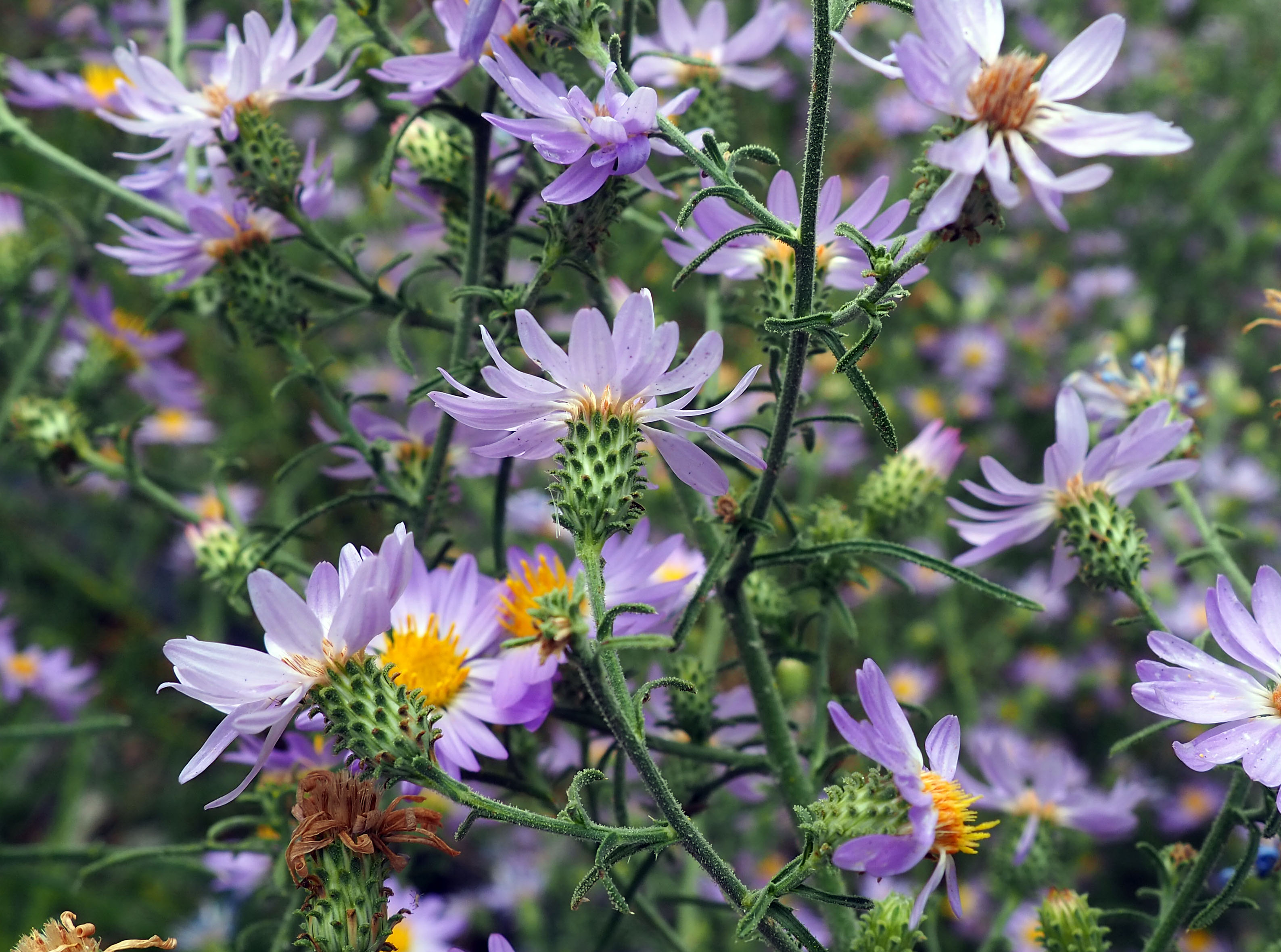
phyllaries of aromatic aster (Symphyotrichum oblongifolium ‘October Skies’)
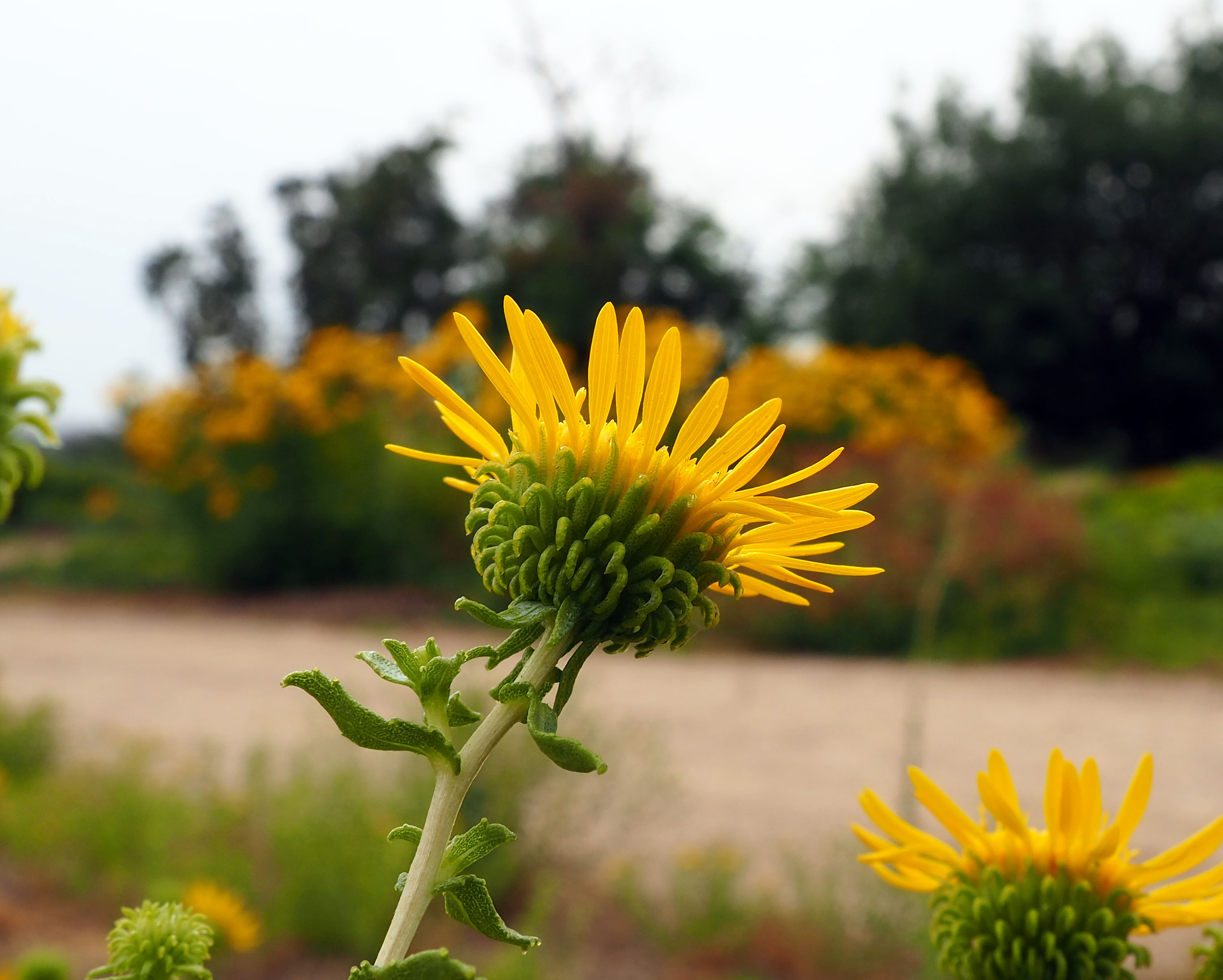
phyllaries of curlycup gumweed (Grindelia squarrosa)

If phyllaries have piqued your interest and you’d like to learn more about plants in the family Asteraceae, I highly recommend getting your hands on the book, The Sunflower Family by Richard Spellenberg and Naida Zucker. It has a North American focus, but it’s a great place to start learning more about this massive plant family.

More Randomly Selected Botanical Terms:

Tea Time: Linden Flower Tea

Lindens make great trees for urban areas. A few species and hybrids in particular are commonly planted in parks, yards, and along the streets of cities across the northern hemisphere and have been for decades – centuries even. They cast dense shade, are tolerant of a variety of climates and soil conditions, and are generally easy to maintain. For much of the year as you move throughout the city you live in, you likely pass by dozens of lindens without thinking twice about them. They are ubiquitous, conventional, ordinary, common. Unless they’re in bloom. For a few weeks in early to mid-summer, flowering lindens produce an impossibly sweet fragrance that can’t be ignored. Along with the scent comes the sound of hundreds of buzzing bees collecting pollen and nectar from the pendulous blooms.

Lindens are trees and shrubs in the family Malvaceae and genus Tilia. Around 30 or so species are found in temperate regions across the northern hemisphere, mostly in Europe and Asia. Depending on who you ask, there are between one and three species native to North America. Tilia caroliniana and Tilia heterophylla are considered by some to be varieties of Tilia americana, or American basswood, which is distributed across central and eastern United States and north into parts of Canada. Another common name for linden is lime because words used to refer to the tree in older languages were similar to the word lime. The name basswood comes from the tree’s fibrous inner bark, known as bast.

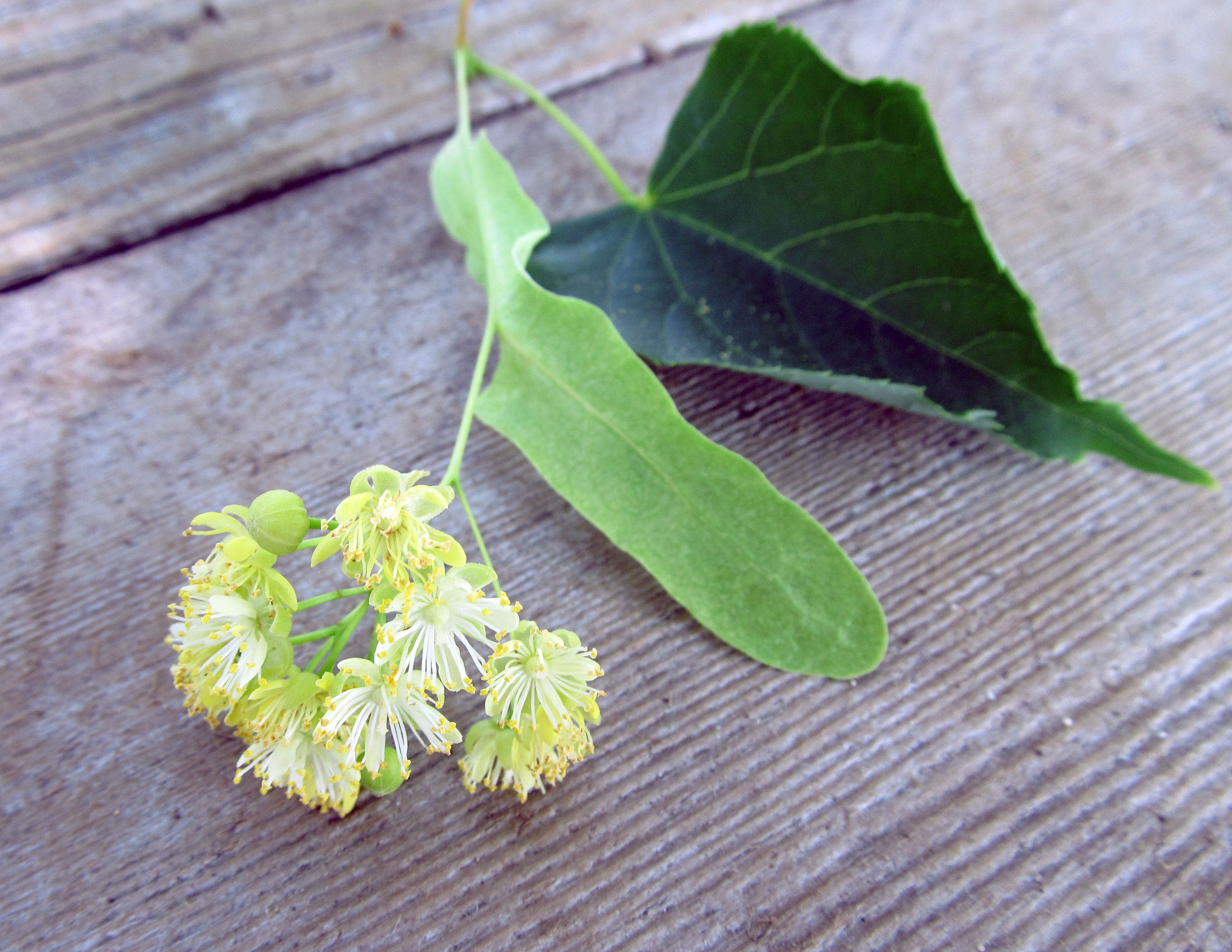
Linden leaves are generally heart-shaped and asymmetrical with serrate margins. Small clusters of little yellow to white flowers form at the end of a slender stem attached to a narrow, ribbon-like, yellow-green bract. The bract aids in seed dispersal by helping the fruits float on the wind away from the parent tree in a manner similar to the samaras of maple trees. The fruits are small, round, hardened drupes that resemble little peas. The fragrant, nectar-rich flowers are not only favored by beekeepers for honey production, but also have a long history of being harvested for making tea (i.e. tisane). Linden flower tea is said to have a number of medicinal uses and health benefits, all of which I take with a grain of salt. This series of posts isn’t meant to be an investigation into the health claims of plants, but instead an opportunity for me – out of sheer curiosity – to try making tea out of a variety of different plants . If medicinal uses interest you, I encourage you to seek out credible, peer-reviewed sources.

I made linden flower tea from flowers I collected from Tilia cordata, commonly known as littleleaf linden. It was an easy one to find due to its popularity as an urban tree. The natural distribution of littleleaf linden extends from Britain across Europe and into western Asia. Its triangular-ovate shaped leaves are 4-10 centimeters long, glossy green on top, and pale green on the bottom with tufts of orange hairs along the leaf veins, concentrated at the base of the leaf where the leaf blade meets the petiole. The tree can reach up to 21 meters tall and has an oval or rounded-pyramidal shape, though many trees in urban areas are cultivars and can be smaller and more compact.

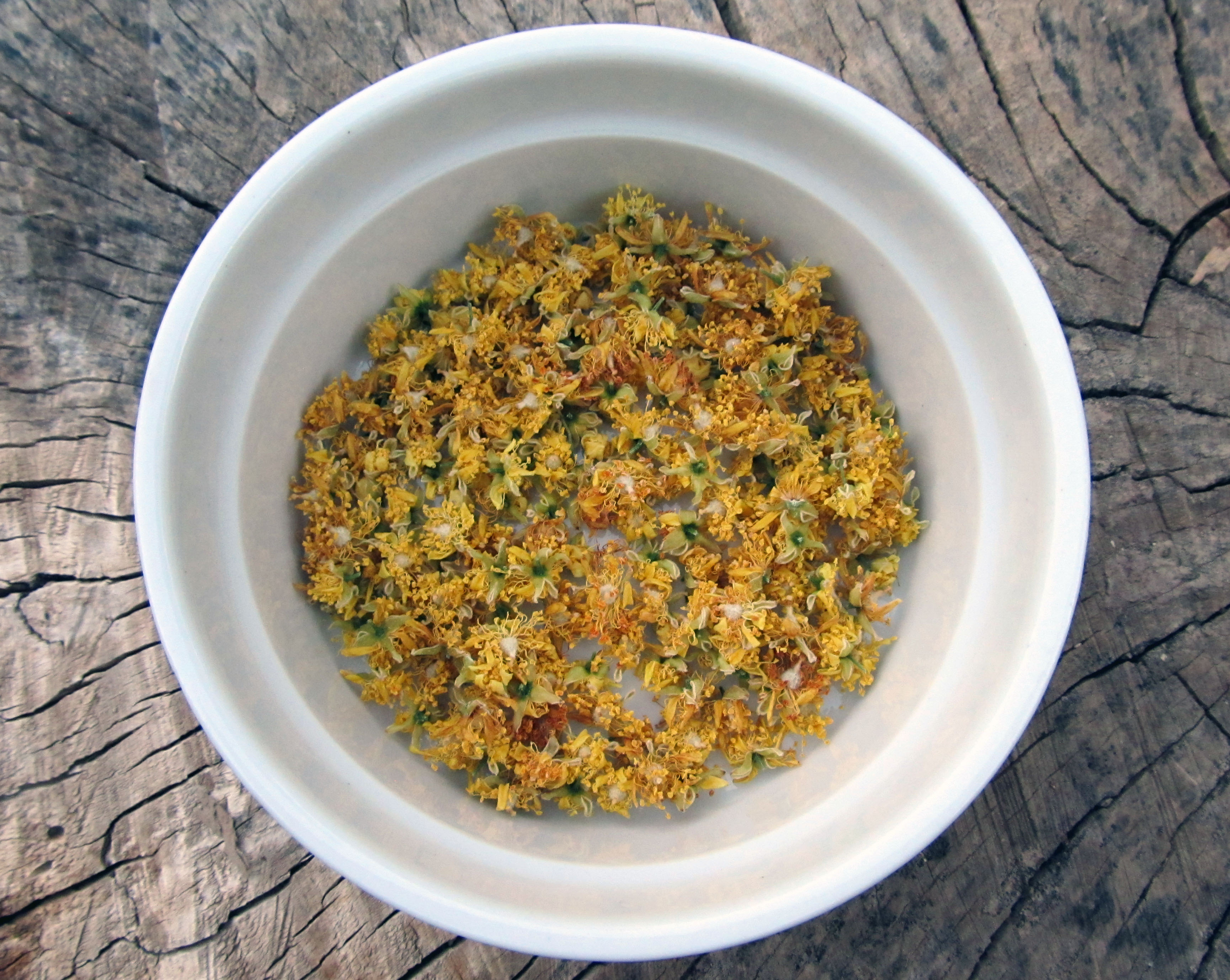
I harvested the flowers – bracts and all – in late June. It’s advised that they not be harvested directly after a rain (or after being hit by sprinklers), and that they are harvested when the flowers are newly opened. I presume this is because the flowers are at their freshest at this point and will be the best for making tea. I layed the flowers out to dry on a clean kitchen towel on top of a metal cake rack. It only takes 2 or 3 days for them to dry. After drying I removed and saved all the flowers and threw out the bracts and stems, but apparently you can use the entire inflorescence if you’d like.

There are several linden flower tea recipes online. I went with 3 cups of boiling water poured over 1 tablespoon dried linden flowers, covered and steeped for 15 minutes. The resulting tea was an appealing pastel yellow color. I tried it plain as well as sweetened with a little bit of honey. I preferred it sweetened, but unsweetened wasn’t too bad, just a little bitter. It has a floral taste and pleasant smell. Sierra said it tasted earthy, like something she wasn’t supposed to be drinking. Despite that odd review, she said she liked it. Since several sources discussed the calming, sleep-inducing effects of the tea, I made sure to drink it in the evening when it would be normal for me to be feeling sleepy. I suggest you do the same.

More Tea Time Posts on Awkward Botany