Succulent Blogs on Tumblr

About four months ago, Awkward Botany branched out into the world of Tumblr, a short-form blogging platform with a heavy social media bent. I haven’t put as much time into it as I would like (and I still have lots to learn about it), but so far the time I have spent there has been entertaining and informative.

One discovery I have made is that there are lots of tumblogs dedicated to botany and horticulture. This shouldn’t come as a surprise though; there are tumblogs concerning pretty much any topic you can think of. Plus, people love plants, so why shouldn’t there be tumblogs aplenty devoted to them?

One subsection of plant-related tumblogs that I have particularly enjoyed following are the cactus and succulent themed ones. In the botanical world, which is replete with diversity, there is no shortage in the variety of colors, textures, and forms to be found. Cacti and succulents are especially fascinating in this regard. Now thanks to Tumblr, hours can be spent admiring them while sitting comfortably in front of a computer screen. I say that with a hint of sarcasm, of course. Seeing these plants in person (either in their natural habitat or in cultivation) would obviously be better, but when that option is not available, the internet is the next best thing.

Over the past few months I have collected a list of cactus and succulent related tumblogs. Below are my favorites. Some of them consist exclusively of photos grabbed from other sites, while others are composed of personal photos along with a mix of other photos. A few of them also offer advice and take questions concerning cactus and succulent cultivation.
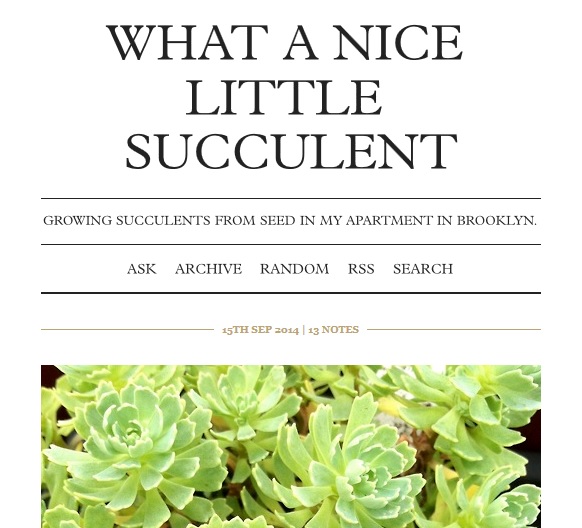
what a nice little succulent

What A Nice Little Succulent a blog about growing succulents in a Brooklyn apartment…from seed! What’s not to like? Great blog name, too.

jacculents

Jack + Succulents – Jack grows succulents in Malaysia and shares advice on how to cultivate and care for them. He also likes coming up with clever names, like Jacculents and Jacktus.
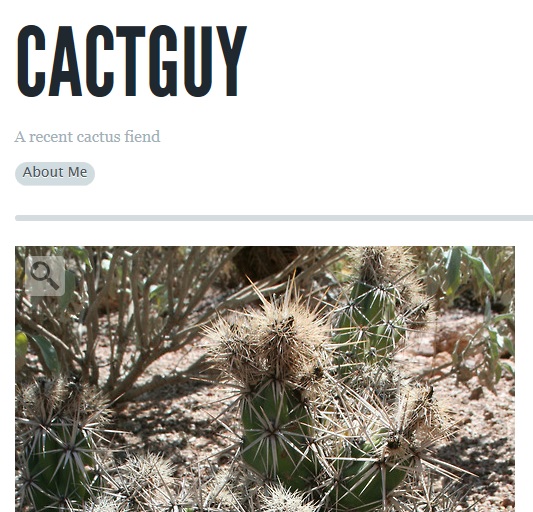
cactguy

Cactguy – Speaking of clever names, Cactguy is a blog produced by a self-proclaimed “cactus fiend.” His pictures are labeled so that you can not only admire the plants but learn the names of them as well.
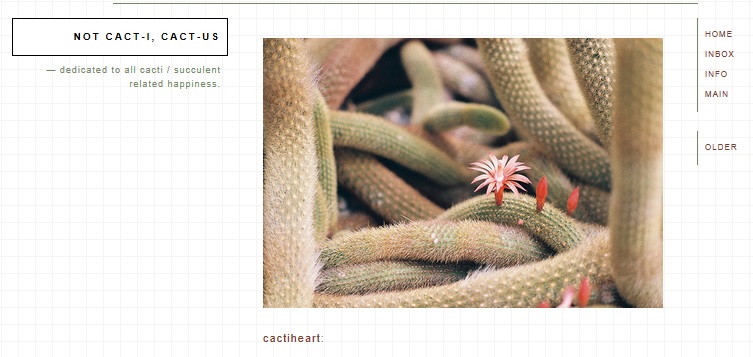
cactiheart

Not Cact-I, Cact-Us – Yes, the clever names abound in the cactus and succulent loving community.
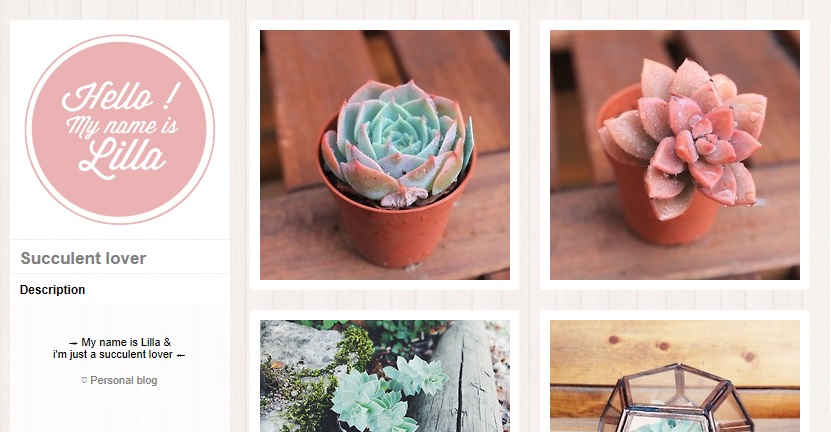
succulent lover

Succulent Lover – A love for succulents pure and simple.

These five blogs barely scratch the surface. There are lots more great ones out there, including Succulents Forever!, Sweet Succulents, and Succulent Love. An excellent one if you are looking for more information about succulents is Cactus Man Dan, which is written by an obsessed cactus and succulent collector in England. He can help you answer any questions you may have about growing and identification.

Do you know of any other cactus and succulent (or plants in general) tumblogs that you would like to recommend? If so, leave your recommendations in the comment section below. And if you feel so inclined, please follow Awkward Botany on Tumblr and/or Twitter. Lastly, with this post I am introducing the new Reviews and Recommendations tab. Go there to read my past review and recommendation posts, and stay tuned for many more to come. 
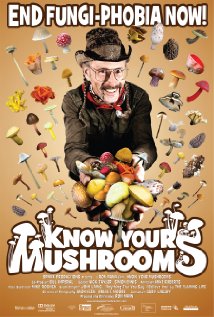
 

Documentary: Know Your Mushrooms

Earlier this month, the 33rd annual Telluride Mushroom Festival took place in Telluride, Colorado. This is an event that draws in hundreds (thousands, perhaps?) of fungi enthusiasts. As a budding fungi enthusiast myself, I get excited when I hear tale of gatherings such as these, and while I did not make it out this year, the Telluride Mushroom Festival is high on my list of things to attend sometime in the years to come.

My fascination with fungi started shortly before I headed to graduate school in Illinois in 2009. I had just read about mycoremediation in a book called Toolbox for Sustainable City Living, and that, along with what I had learned about soil fungi in my college soils courses, had me very curious about the world of mycology. I have yet to spend the kind of time that I would like to on this subject, but it remains of great interest to me.

A couple years ago I was writing weekly recommendations on my previous blog, the juniper bends as if it were listening. One of my weekly recommendation posts was about a documentary film called, Know Your Mushrooms. I am reposting that review  here in honor of this month’s mushroom festival in Telluride, and because I think it’s a film worth watching. No, it is not about plants per se, but it is about a kingdom of living things that regularly interacts with plants. Not only that, but it’s about a major player in the ecology of practically every ecosystem on earth. Bottom line: if you are at all interested in the natural world, you will be interested in this film.

know your mushrooms

Mushrooms freaks, fungiphiles, and myco-fanatics alike are all probably well aware of this fantastic documentary film by Ron Mann entitled, Know Your Mushrooms, but for uninitiated folks and novices like myself, this is a great introduction. This film will acquaint you with a peculiar crowd of mushroom lovers and fungus aficionados, where you will marvel in their uniqueness and their vast knowledge concerning the fascinating world of mycology. Mann bases his film around his visit to the Telluride Mushroom Festival in Colorado, where mushroom fans have gathered annually for many years now to celebrate and revel in the fungal world. Mann converses with several mushroom experts and enthusiasts, but spends most of his time with self-proclaimed guru, Larry Evans. Alongside Evans, Mann explores numerous mycological topics, including mushroom hunting, mushroom cooking, poisonous mushrooms, psychedelic mushrooms, mushroom folklore, mushroom health benefits, and the ecological and environmental benefits of fungi (mycoremediation!). This is a very well-produced and well-directed film, maintaining the interest and attention of the viewer as it transitions from one aspect of mushroom culture to another, simultaneously providing education and entertainment throughout. If your viewing experience is anything like mine, by the time this film is over, you will be wishing that you were as knowledgeable about mushrooms as the folks featured in this film. As a result of watching Mann’s documentary, I have vowed to redouble my efforts and commit myself to the study of mycology so that one day I can join fellow fungus freaks in a celebration of this magnitude. Perhaps you will join us…

Morels harvested on the forest floors of Illinois

Morels harvested on the forest floor of Illinois

Book Review: Seedswap

Seedswap: The Gardener’s Guide to Saving and Swapping Seeds by Josie Jeffery

Continuing debate and concern over genetically modified crops has resulted in increased interest in heirloom and open-pollinated seed varieties. The communities and groups that have emerged from this movement are both the impetus and the target for Josie Jeffrey’s recent book, Seedswap.

Seed swaps are nothing new, of course. Humans have likely gathered in some form or another to exchange seeds since the invention of agriculture, but recent interest in saving, sharing, and trading seeds parallels the GMO debate and the rise of urban agriculture. In that regard, Jeffrey’s book is a timely resource for anyone interested in joining the seed banking, seed swapping, and seed activism movements.

While much of this book is devoted to explaining the how-to’s of seed saving (including specific information on how to grow and save seed from 49 vegetable, herb, and flower varieties), the content that really sets it apart from other seed saving guides is, unsurprisingly, the focus on seed banking and seed swapping. Jeffrey provides a brief history of seed banks, the reasons behind them, descriptions of some of the more prominent ones, and some tips for starting a seed library. For seed swap novices, Jeffrey’s advice concerning where to find them and what to expect when attending them, as well as tips and etiquette to keep in mind are incredibly useful. After spending a few moments with Seedswap, every gardener should find themselves inspired and motivated to start saving and sharing seeds.

Jeffrey’s book is beautifully designed and well put together. Apart from the fact that it jumps around a bit and could stand to be better organized, it’s a nice little reference for anyone involved or looking to be involved in the world of seeds.

seed swap book

‘Tis the season for seed swaps. Find fellow gardeners to swap seeds with here.

Related Posts

Starting Seeds Indoors: The Planning Stage

Seed Swaps

Onion Seed Viability, etc.

Article: The Intelligent Plant

The New Yorker’s last issue in 2013 included an article by Michael Pollan called “The Intelligent Plant” in which Pollan explores some of the latest research revealing the ability of plants to sense their environment in ways that are analogous to seeing, hearing, and smelling. In the article Pollan dialogs back and forth between plant scientists who call this line of research “plant neurobiology” and plant scientists who seem to abhor that term. As the article progresses, you learn that the arguments between the two groups are not necessarily about the science itself but about vocabulary. Can plants learn the way we understand the term, to learn? Can we really say that plants are intelligent or conscious? Aren’t those traits reserved for organisms with brains? And regarding brains, plants don’t have them, so why plant neurobiology? Neuroscience is the study of nervous systems, so plant neurobiology must be a misnomer, right?

Well, despite the arguments over language, the research is pretty compelling. Plants are proving to be more aware of their surroundings and their actions seem to be more calculated than we originally assumed. They are not simply sessile organisms being acted upon, but they are doing some acting – lots of it, in fact. It is a remarkable field of study (whether you choose to refer to it as plant neurobiology or something else), and it will be exciting to see where it takes us.

Pollan’s article is worth a read if you can find the time (be warned, it’s lengthy), and it’s getting some coverage. Pollan recently appeared on Science Friday with Ira Flatow where he talked about his experience researching the article. And Pollan, of course, isn’t the only one talking about this stuff, Wired featured an article about it last month as well.

Check out this video associated with Pollan’s article (narrated by Pollan) of bean plants that appear to be deliberately reaching out to grab onto a pole.

sensitive plant

sensitive plant – Mimosa pudica

photo credit: Wikimedia Commons

Related Posts

Book Review: What a Plant Knows

Documentary: What Plants Talk About

Documentary: What Plants Talk About

Earlier this summer I posted a review of a book called, What a Plant Knows, by Daniel Chamovitz. It’s a book that describes plant senses – senses that are similar to human senses (i.e. seeing, hearing, smelling, etc.). Plants are much more aware of their surroundings than we might initially think, and so I recommend this book to anyone interested in gaining a better understanding of plants and their “awareness”. However, I also understand that this can be an intimidating subject – especially for those who haven’t spent much time studying plants and their biology. Chamovitz wrote his book with the intention of making this subject accessible to everyone. Anyone with even a limited understanding of biology should be able to understand the basic concepts in Chamovitz’s book. However, the subject can still be challenging.

Luckily, a recent documentary by PBS explores similar concepts. It simplifies things even more – exploring the ways in which plants communicate with the world around them, even without having the organs we typically attribute to communication and awareness (i.e. brains, ears, eyes, etc.). The documentary is called What Plants Talk About. I watched it recently and was reminded of Chamovitz’s book. They fit together so well. If you have any interest in this subject at all, I recommend both. If all you are after is a simple introduction, watch the documentary. If the documentary intrigues you, read the book.

There is a lot more to learn about plants and their “awareness,” but these sources are a great start. Watch the documentary and/or read the book and then let me know what you think in the comments below. Meanwhile, we wait in anticipation of what science might discover next concerning this remarkable aspect of the plant kingdom.

Book Review: What a Plant Knows

What a Plant Knows: A Field Guide to the Senses
by Daniel Chamovitz

Humans commonly anthropomorphize non-humans. It just seems easier, for example, to say that a plant “likes” a particular type of soil, even though we know that a plant doesn’t “like” anything because a plant does not experience emotion. What we really mean to say is that a plant is adapted to and therefore performs best in a particular type of soil. However, knowing this, is it plausible at all to say that a plant can see, smell, feel, hear, sense its location, or remember things? Daniel Chamovitz argues that it is, and he has plenty of credible research to support his thesis.

In short, plants have senses very similar to human senses and are far more aware than we might initially think. To be clear though, Chamovitz states early on in his book that his “use of the word ‘know’ is unorthodox. Plants don’t have a central nervous system; a plant doesn’t have a brain that coordinates information for its entire body.” Nor do they have noses or ears or eyes. Instead, when Chamovitz uses words like “see,” “smell,” “hear,” and “know,” he is referring to various chemical reactions and physiological phenomena that occur in plants which produce reactions that are analogous to human senses. When a willow tree is damaged by tent caterpillars, a neighboring willow tree becomes unpalatable to the caterpillars and thereby resists a similar fate. Why? Because the damaged willow tree releases a gaseous substance that nearby willow trees can sense (or “smell”). This is a signal for them to protect themselves by building up toxic chemicals in their leaves.

Another example offered by Chamovitz involves the ability of some plants to remember winter. Cherry blossoms appear in the spring because winter has passed. A certain period of cold temperatures is what induces this response. If the trees bloom too early, the blossoms will freeze. If they bloom too late, the fruits would not have time to mature before cold temperatures returned. The seeds of winter wheat are planted in the fall and germinate in the spring. They also require a period of cold temperatures in order to germinate. This process is called vernalization, and it involves a specific gene in the plant called flowering locus C (FLC). After vernalization, this gene is turned off which signals the plant to flower (provided that other environmental conditions, such as light and soil temperature, are conducive to flowering, etc.).

A common myth is that plants grow better when people say nice things to them or play relaxing music for them. Chamovitz thoroughly debunks this myth and concludes that no evidence has been found for plants being able to hear. Plants do however possess many of the same genes that humans possess, including several genes that when not functioning properly can result in deafness in humans. These genes encode proteins called myosins. Myosins in humans help form the hair cells in our inner ears which are essential for hearing. Myosins in plants help form root hairs which are essential for absorbing water from the soil. While the functions of these proteins are quite different in humans and plants, mutations in the genes code for these proteins can have drastic results for both.

All this talk about chemistry, genetics, and physiology may sound a bit intimidating…but don’t worry. While Chamovitz endeavours to tell the science accurately and in detail, he does so in a very approachable manner, making this an easy read for anyone with a basic understanding of biology. Even if you don’t fully comprehend the technical stuff, the anecdotes are well told and captivating, and after you finish reading this, you are certain to have a greater appreciation for plants and all of the fascinating things that they can do. While we should be careful to be too anthropocentric, this book makes it clear that plants are a lot like us…or should I say, we are a lot like plants? Either way, we have many things in common (including much of our DNA), which is all the more reason to appreciate plants for the amazing organisms that they are.

This is a video (recommended by Chamovitz) of a dodder plant sensing the location of a tomato plant. Dodder is unable to photosynthesize, so after attaching itself to the tomato plant it will feed on the nutrients that the tomato plant produces.

Related Post:

– Excerpt from What a Plant Knows