
Learning to identify Kentucky coffeetree in the winter brings you one step closer to making a coffee-like (albeit caffeine-free) beverage from its seeds. Humans have a long history of occasionally using the “beans” of Gymnocladus dioicus to make this tisane, which explains common names like coffeetree, American coffee berry, and coffeenut. The process is a bit time consuming, and the end result is mixed, but foraging adventures like this are all about the experience. This drink is not likely to replace whatever you are currently drinking in the morning, but it does offer an interesting diversion.
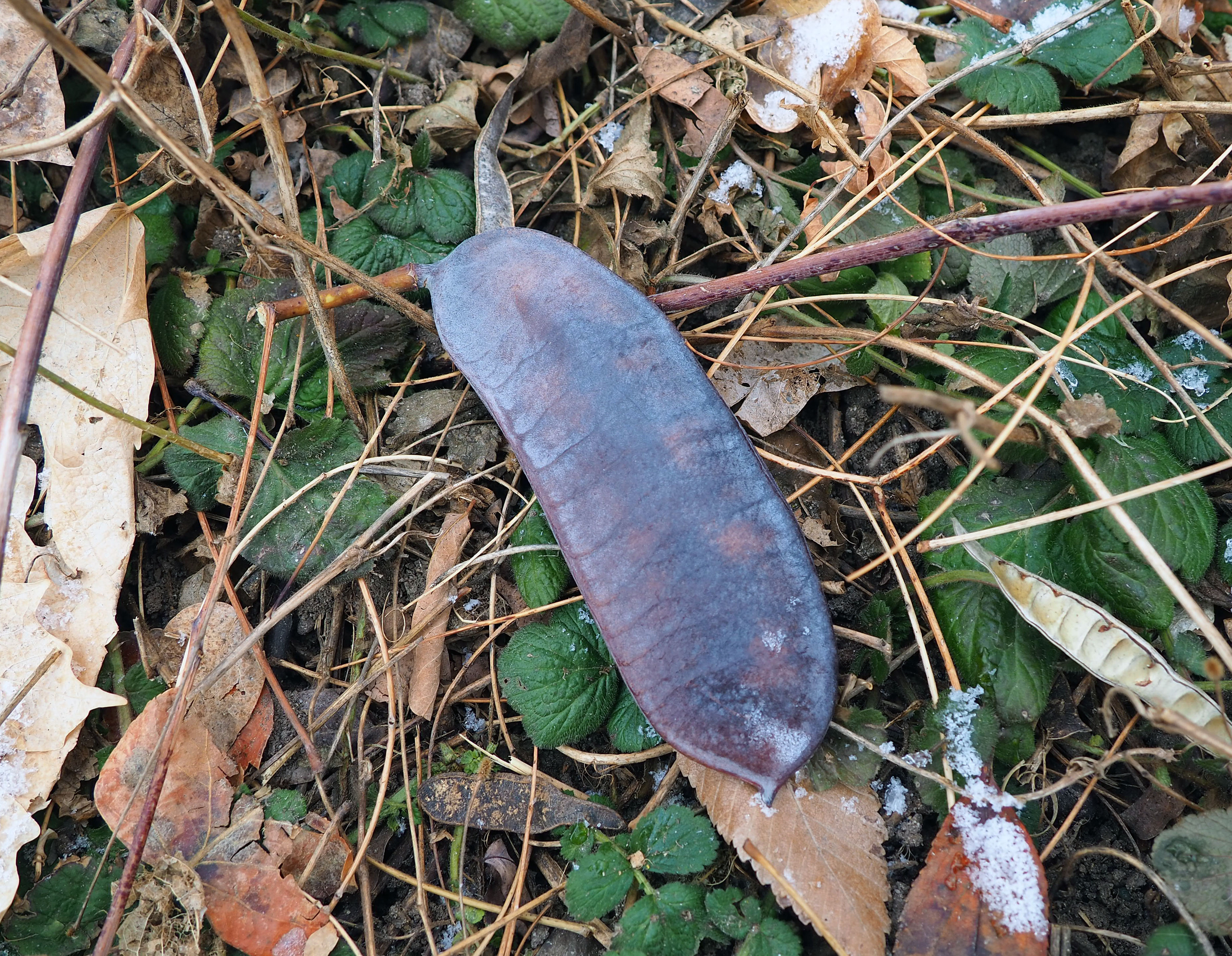
Winter is the best time to collect the pods, which are flat, leathery, brown to black in color, and about 2 inches wide and 6 inches long. The stocky fruits are often found hanging from the tips of the tree’s bare branches. Many also fall to the ground over the course of the season, making them easier to collect. If you split the pods open early in the season, you’ll find the seeds embedded in a sticky, neon green goo that will stick to your hands and clothes. As the year progresses, the glue-like substance dries out and is easier to deal with. The seeds are dark, extremely hard, rounded and flattened, and about the size of a penny or nickel. The funiculus, which is a short stalk that connects the ovule/seed to the ovary, tends to be fairly prominent and something you don’t often get to see on seeds.

Once you’ve collected several pods and removed the seeds from the gooey innards, soak the seeds for an hour or two and then rinse them, making sure to remove dried up goo and any remaining funiculi. Pat the seeds dry and place them in a baking dish with a lid for roasting. The roasting process is said to eliminate the toxicity of the seeds. The lid is important because several of the seeds will pop open during roasting and will fly around in your oven if they aren’t contained.
The fruits of Kentucky coffeetree contain a toxic compound called cytisine, an alkaloid that is similar in action to nicotine. The Handbook of Poisonous and Injurious Plants by Nelson, et al. states that “the cytisine content of the seeds is quite low; and chewing one or two would not be expected to produce toxic effects.” Actually, the bigger risk of chewing one of these rock hard seeds is breaking your teeth. Cytisine poisoning includes typical symptoms like diarrhea and vomiting; in extreme cases it can lead to coma and death. If the seeds are properly roasted, you won’t have to worry about any of this, but as with anything you are trying for the first time, start with small amounts.
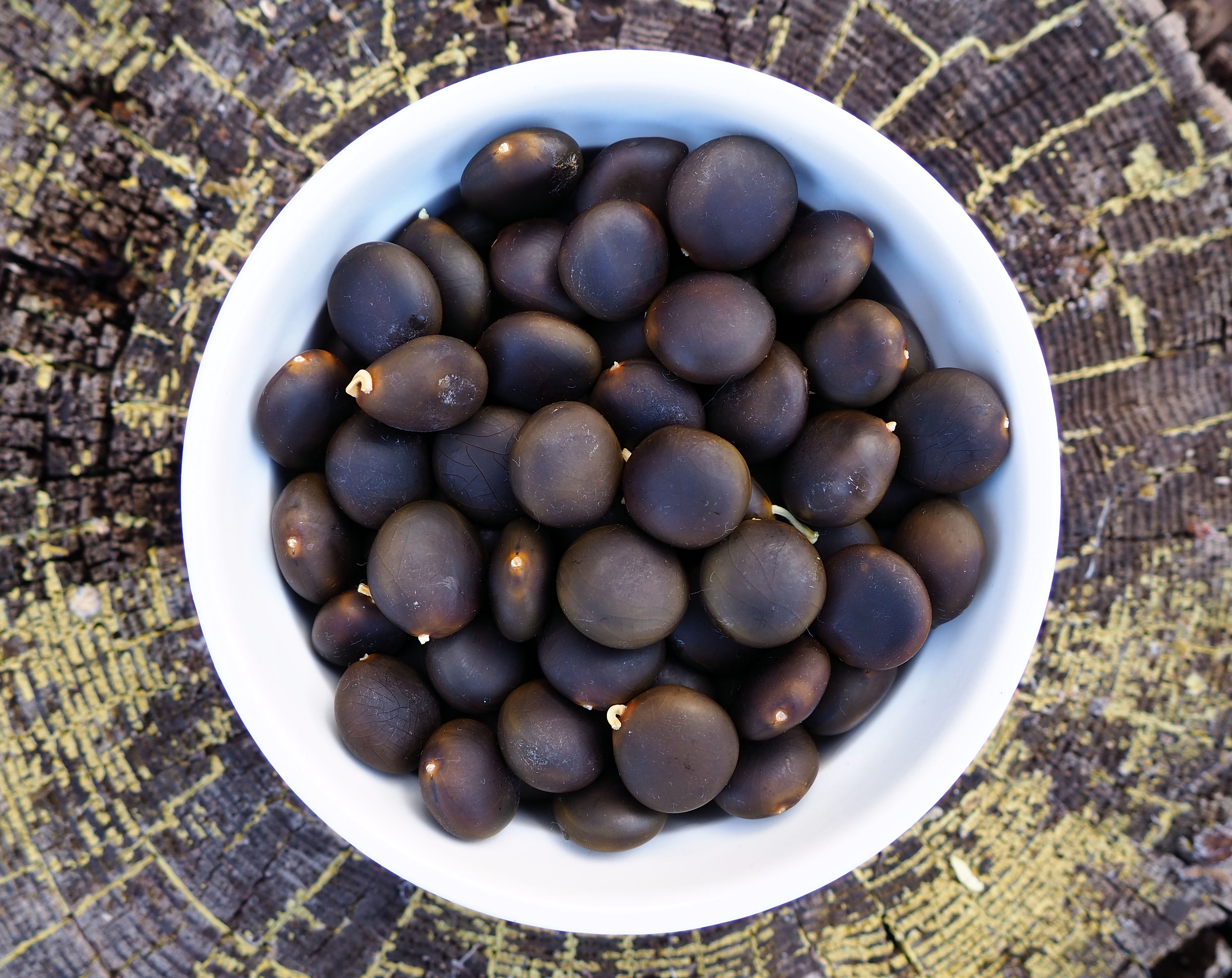
Times and temperatures for roasting vary depending on who you’re getting your information from. I went with 300° F for 3 hours (which ended up being 3 and a half hours because I forgot to take them out in time). One source suggested roasting the seeds for only 2 hours for better flavor, but I decided to err on the side of caution and roast them for longer. Many of the seeds will have popped open during the roasting process. For those that haven’t you will need to use a nutcracker or some other comparable tool to crack the seed coat and remove the insides. Dispose of the seed coats and grind the remaining bits into a fine powder using either a coffee grinder or mortar and pestle. You’ll end up with a fine, chocolate-colored powder which you will use to make your “coffee.”
You can prepare this beverage in the same way you would typically choose to make coffee, but keep in mind that upon adding water, the fine grounds quickly turn to a mud-like substance and will block up the filter you are using. For this reason, I recommend small batches. I found Kentucky coffeetree “coffee” to be very earthy and rich and somewhat similar to strong black coffee. Sierra tried it and immediately exclaimed, “That’s nice!” and then proceeded to give it two thumbs up. Some people like black coffee. I added cream to it and found it much more pleasant to drink. Other people don’t think this beverage tastes like coffee at all and instead call it tea-like, chocolaty, fruity, or “akin to mud,” among other more negative reviews. I think it’s a drink that could grow on me, but considering the effort it takes to make one cup, I don’t see that happening any time soon.

Have you tried making “coffee” from the seeds of Kentucky coffeetree? Let us know what you think about it in the comment section below.
More Tea Time Posts on Awkward Botany:
 awkward botany
That was very interesting!
I think so too! Thanks for reading 🙂
About 6-7 years ago, my dad planted a small tree he found in a dumpster. It had but one leaf on the top end. The tree has grown very tall and even has little white flowers. I got curious about what kind of tree it is, and using an app I found that it’s a Kentucky Coffee Tree! It’s beautiful. The little blossoms and all. I might try roasting the beans in the winter ❄️
Pingback: Tea Time: Fireweed – awkward botany
I have used roasted Kentucky coffee bean for an additive to my coffee, kind of like cocoa or carob, and found it to be delicious. It does seem to have a slight effect similar to caffeine, I noticed a little bit of pressure between the temples, that might be akin to a kind of high.
Pingback: A new study says cytisine and varenicline are the most effective methods. Why are they so hard to get in the U.S.?
Pingback: A new study says cytisine and varenicline are the most effective methods. Why are they so hard to get in the U.S.? - FindBerg
Pingback: A new study says cytisine and varenicline are the most effective methods. Why are they so hard to get in the U.S.? – Total News
Pingback: New research says cytisine and varenicline are the most effective methods. Why is it so difficult to obtain in America? – Paper Plus Media
Pingback: There's a Pill That Helps People Quit Smoking. Why Isn't It Sold in the U.S.? - Media Downloader
Pingback: Quitting smoking: A new study says cytisine and varenicline are the most effective methods. Why are they so hard to get in the U.S.?
Pingback: Pourquoi vous n'avez jamais entendu parler du meilleur médicament anti-tabac - techtalkeveryday.com
Pingback: 2023: Year in Review – awkward botany
Pingback: Kentucky Coffee Beans: A Unique Midwestern Harvest – Bigfoot's Friend
Pingback: Tea Time: Self-heal – awkward botany
I drink Kentucky Coffee Tree every day, made from beans I’ve collected in a nearby Arboretum. I have now perfected the process, after buying a cracker, I crack each seed before roasting, I roast at 250 for 2 hours and then at 400 until it gets really richly colored and smelling. I then grind up the whole thing, shell casing and all, and it makes a delicious beverage, as I mix it half and half with regular coffee and put it in my French press.