Book Review: Wild Wasatch Front

If it isn’t clear by now from my Weeds of Boise series and countless other posts, I happen to be interested in the flora and fauna of urban areas. Urban ecology is a fascinating field of study, and I’m not sure that it gets the attention it deserves. Nature is not some far away place, and you shouldn’t have to leave city limits to go in search of it. Remarkably, nature exists right outside your front door, even if you live in the middle of a massive city. It may be a different sort of nature than the one you might find in a national forest or a state park, and it may be composed of species introduced from all corners of the world, but it is still a collection of living organisms interacting with each other and the surrounding environment in unique and important ways. The question is, can you grow to appreciate nearby nature and recognize that the ecological interactions that exist within the context of a city are just as valid as those you’ll find outside of our built environments?

Luckily, there are resources that can help you with that, including a recent book compiled by Lisa Thompson and others at the Natural History Museum of Utah (NHMU). It’s called Wild Wasatch Front, and it’s of particular interest to me because it covers a region that’s relatively close by, and our two locations share a number of similarities. Plus, I played a small role in reviewing some of the plants (specifically the weeds) that ended up in the book (Sierra would insist that I mention this, so there you go). Similar books exist for other regions across North America and elsewhere, so I encourage you to seek out a book that applies to your hometown.
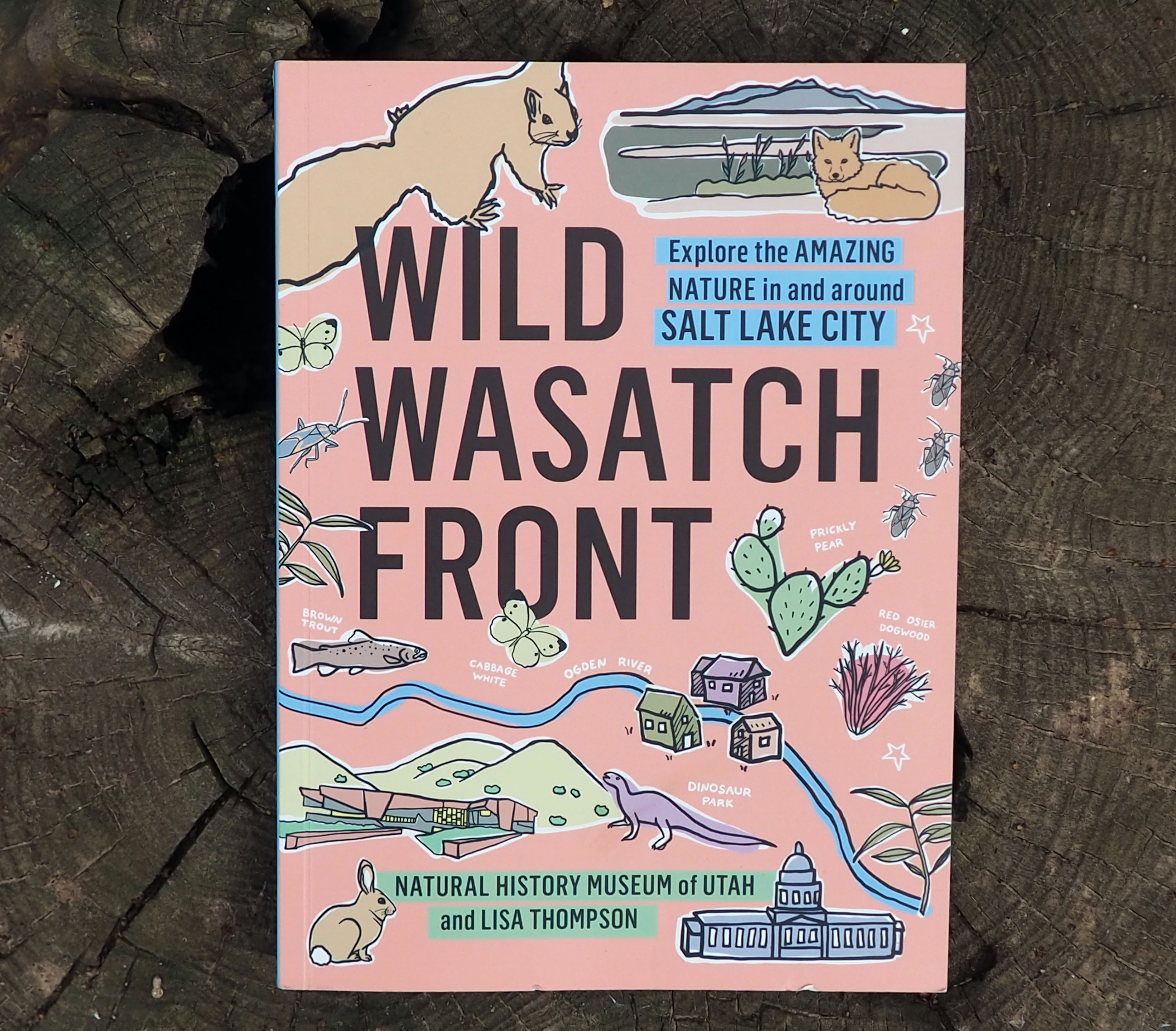
The Wasatch Front is a metropolitan region in north-central Utah that spans the western side of the Wasatch Mountains and includes a long string of cities and towns extending for many miles in all directions. Included in that list of cities is Salt Lake City, the state’s capitol and largest city in the state. The idea for a book about urban nature in the Wasatch Front was inspired by an exhibit at NHMU called “Nature All Around Us.” The exhibit and resulting book offer a new perspective for those insisting that “nature and cities cannot coexist” or that the nature found in cities is influenced by humans and therefore shouldn’t be considered “real.” Hundreds of organisms making a life for themselves within the boundaries of our cities might argue otherwise.

Wild Wasatch Front is divided into three main sections, with each section being worth the price of the book on its own. First there are a series of essays about urban nature and ecology. Names you might recognize, including Emma Marris and Riley Black, contributed to the book, as well as several other people that live and work in the western U.S. and have an interest in nature and environmental issues, especially as they relate to cities. Novel ecosystems is a reoccurring theme, not just in the essays but throughout the book. In her essay, Sarah Jack Hinners writes, “urban nature is a mixture of the intentional and the unintentional,” adding that “for every tree or rosebush or lawn that we plant and carefully nurture, there are multitudes of other plants and animals that grow and thrive uninvited and unnurtured by us.”

The largest section in the book is a field guide, profiling 127 plus species that call the Wasatch Front home, some native and some transplants. This section is divided into subsections that include birds, invertebrates, fungi and lichen, mammals, reptiles and amphibians, street trees, and wild plants. The entry for each species includes a brief description, a few interesting facts, and details on how and where to find them, accompanied by images. With the variety of creatures covered, you are sure to find something that interests you and a reason to go out looking for your favorites. You may even learn something new about a species you’ve been seeing for years, such as house finches. It turns out that the colorful patches on a male house finch are the result of the plants they eat. These patches can be red, orange, or yellow. The redder the better though, because female house finches seek out mates with this coloration.

Naturally, my focus was mainly aimed at the plants covered in this section. I appreciated the mixture of native and introduced plants, even the inclusion of plants considered to be invasive. Instead of vilifying these species, there is an attempt to understand them and find value in them, even in spite of the concerns and negative opinions held about them. Box elder (Acer negundo) is an example of a plant that has both native and introduced populations. Once widely planted in yards and on farms, this tree has “fallen out of favor.” Its weak wood (a result of growing so quickly), can result in a messy, unattractive tree, making it a poor choice for a street tree. However, it propagates itself readily and shows up in vacant lots and other urban locations that receive minimal management and human attention. In the Wasatch Front, you can find box elders that are native, naturalized, and cultivated, an unlikely scenario unique to urban areas.
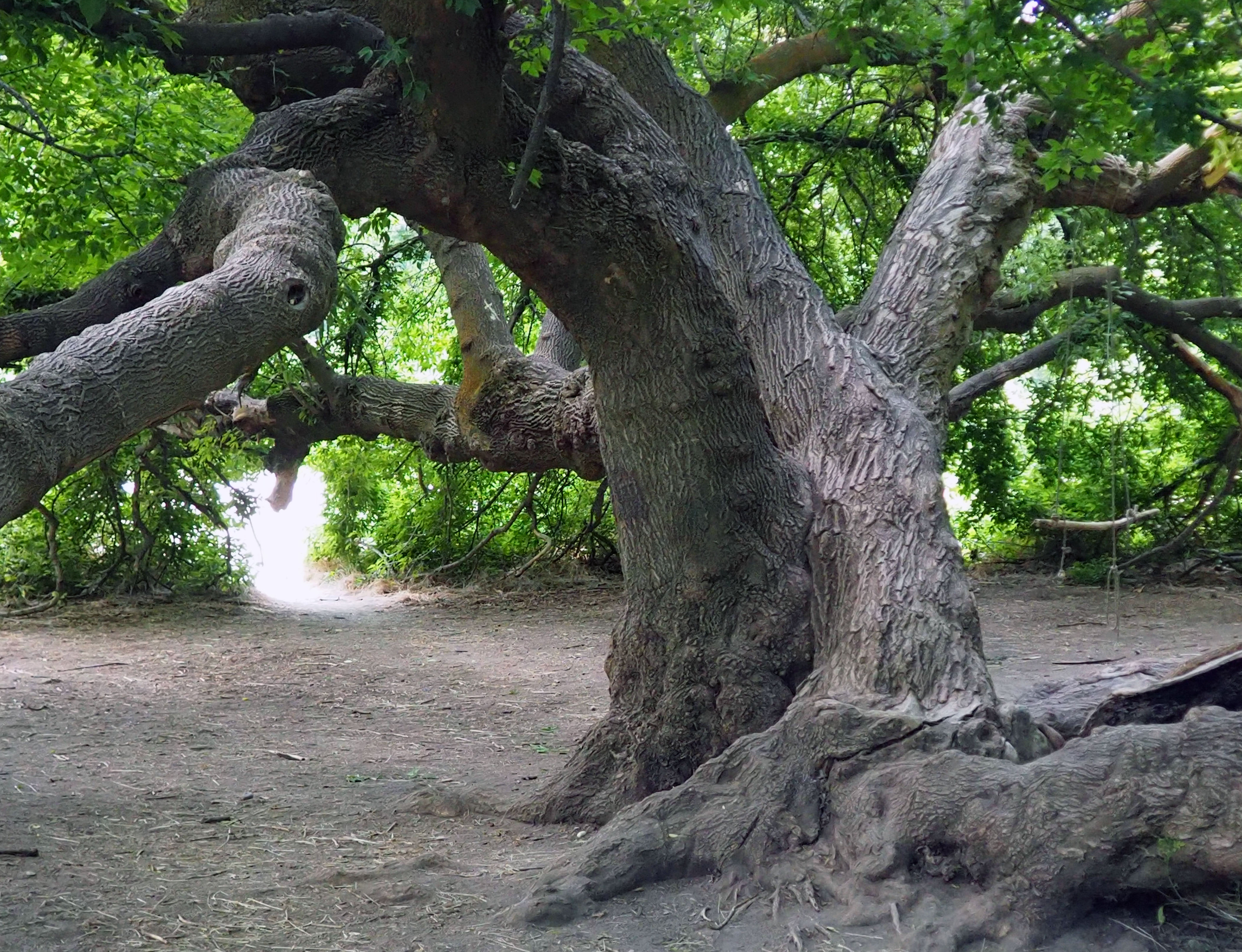
massive box elder (Acer negundo) in Boise, Idaho

The third and final section of the book is a guide to 21 different hikes and field trips in and around the Wasatch Front. Each field trip features a hand-drawn map and some basic notes about the hike. Details about what can be seen along the way are included in the descriptions, which are sure to entice you into visiting. Whether or not you think you’ll ever make it out to any of these spots, this section is still worth reading if only for the ongoing discussions about urban ecology. For example, in the entry for Gib’s Loop, abrupt changes in land ownership and land use (a common experience when hiking in urban areas) is addressed: “Human impacts in the foothills…don’t end at backyard fences, and many animals use resources in both habitats. It’s more interesting to think of cities and the surrounding foothills as part of an interconnected system rather than separate and distinct.”

The field trip section is also used as a teaching opportunity to describe more of the species you’ll find in the Wasatch Front. In the entry for Creekside Park, learn how to identify creeping mahonia (Berberis repens), with its low growing habit and matte leaves, and compare it to Oregon grape (B. aquifolium), with its more upright habit and shinier leaves.
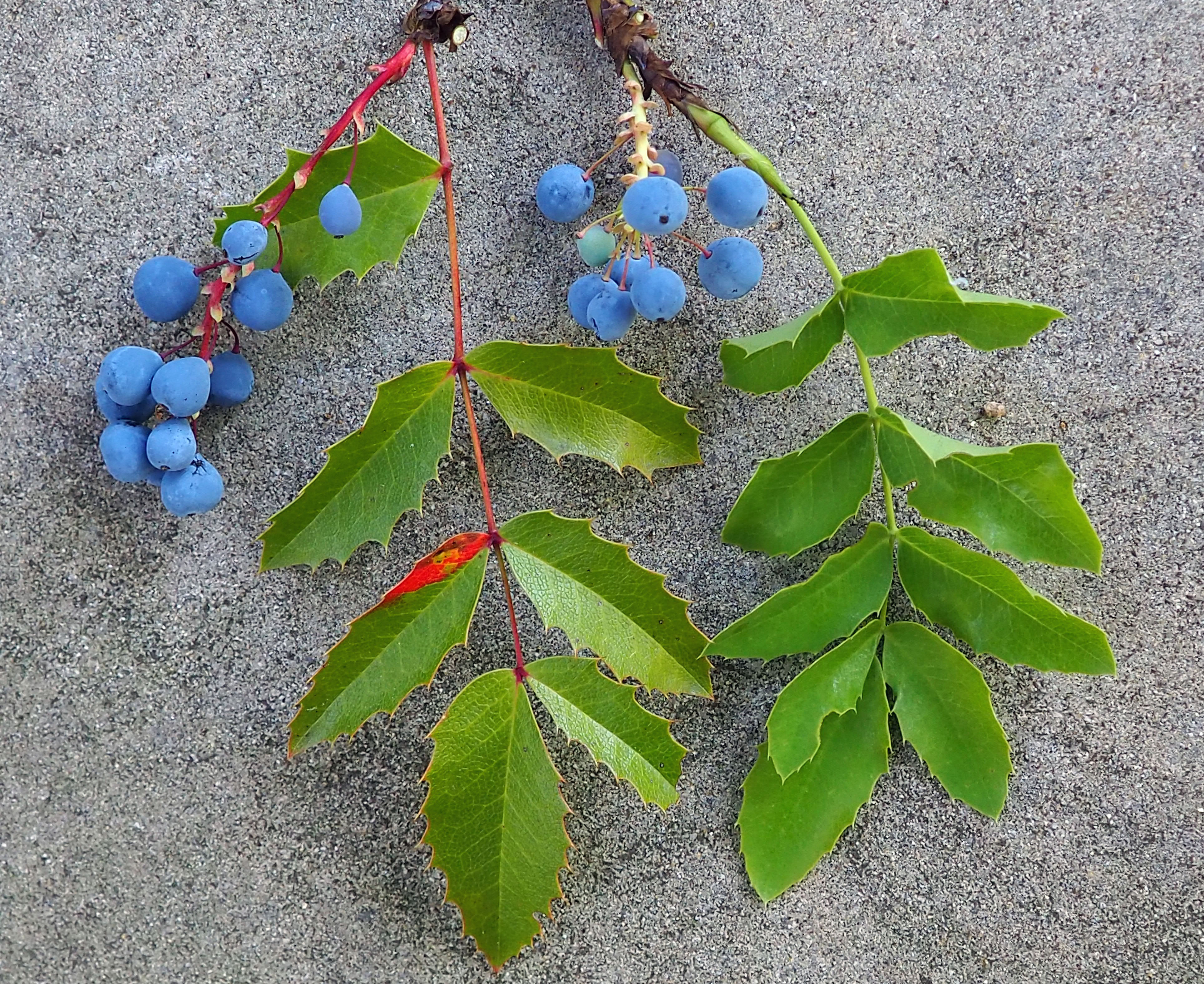
Berberis aquifolium (on the left) compared to Berberis repens (on the right)

Last year, in anticipation of Wild Wasatch Front, I came across another book with a similar focus. This book was put out by a group called The Urban Field Naturalist Project, headquartered in Australia. Their book, A Guide to the Creatures in Your Neighbourhood, encourages its readers to become urban naturalists and offers resources to help them get started. Just like Wild Wasatch Front, the bulk of the book is a field guide to species found in and around urban areas (in Australia, of course). In place of a guide to hikes and field trips, there are instructions on how to start nature journaling, which is a key component of becoming an urban field naturalist. Getting outside and learning to recognize nearby nature is step one, documenting what you see and sharing those observations with others is step two. Taken together, these two books will help you gain a better appreciation for urban nature and will hopefully inspire you to work to conserve what is there and make room for more.

More Book Reviews:

Book Review: A Gardener’s Guide to Botany

Avid gardeners spend a lot of time getting up close and personal with their plants. Whether they have a background in botany or not, they are bound to notice things about plants that others won’t. Questions are sure to arise about what their plants are up to, how they manage to do the things they do, or what might be done to help make their lives better. In the age of information, answers can be found at the touch of a button and from a wide variety of sources, some more trustworthy than others. The latest resource for gardeners with a question is A Gardener’s Guide to Botany. Written by plant expert and seasoned science communicator, Scott Zona, this is a source of information that’s not only trusted and highly credible, but also approachable for readers at any level and an absolute joy to read.

A Gardener’s Guide to Botany by Scott Zona, Ph.D.

You may know Zona as the go-to guy when it comes to questions about palms or tropical plants, but his knowledge of the plant kingdom extends far beyond these diverse groups. Zona has spent the majority of his life studying plants in all their forms across a wide variety of landscapes and has been sharing his knowledge through various institutions and societies that he’s been a part of along the way. His book is like a summary or overview of all the things he’s learned throughout this journey. It’s also just the beginning, a jumping off point and invitation to learn even more about the endlessly fascinating world of botany.

In the first chapter, Zona helps us understand just what makes a plant a plant – what separates plants from all other walks of life, and what plants have in common with other living things. Plants were one of the first forms of life that came about in the early years of life on our planet. Their evolution helped set the stage for so many other lifeforms to come. Due to the fact that they are generally fixed to one spot for the duration of their lives, they have had to adapt to deal with a wide variety of threats and stressors without the benefit of being able to run away or head for higher ground. As climates around them have changed and landscapes have shifted, so have they. All the while, plants have continued to be primary producers and ecosystem engineers, benefiting the lives of so many other living things, including humans, right up until this very day. Their existence is critical to the continuation of life on earth. Many of the ways that plants have been able to be so successful for so many millions of years are described in Zona’s book.

The second chapter of A Gardener’s Guide to Botany is a lesson in plant anatomy. Zona provides an overview of the inner and outer workings of roots, shoots, leaves, flowers, and fruits. Understanding basic plant anatomy can be important for maintaining a successful garden; it’s also just incredibly interesting in its own right. Plants are simple constructions, yet show up in such diverse forms. By modifying their limited parts, they are able to produce a wide variety of interesting features unique to each species. A branch becomes a thorn, a leaf becomes a spine, a root becomes a fleshy storage organ, an inflorescence becomes a tendril. This is just the beginning of the many surprises plants have up their sleeves.

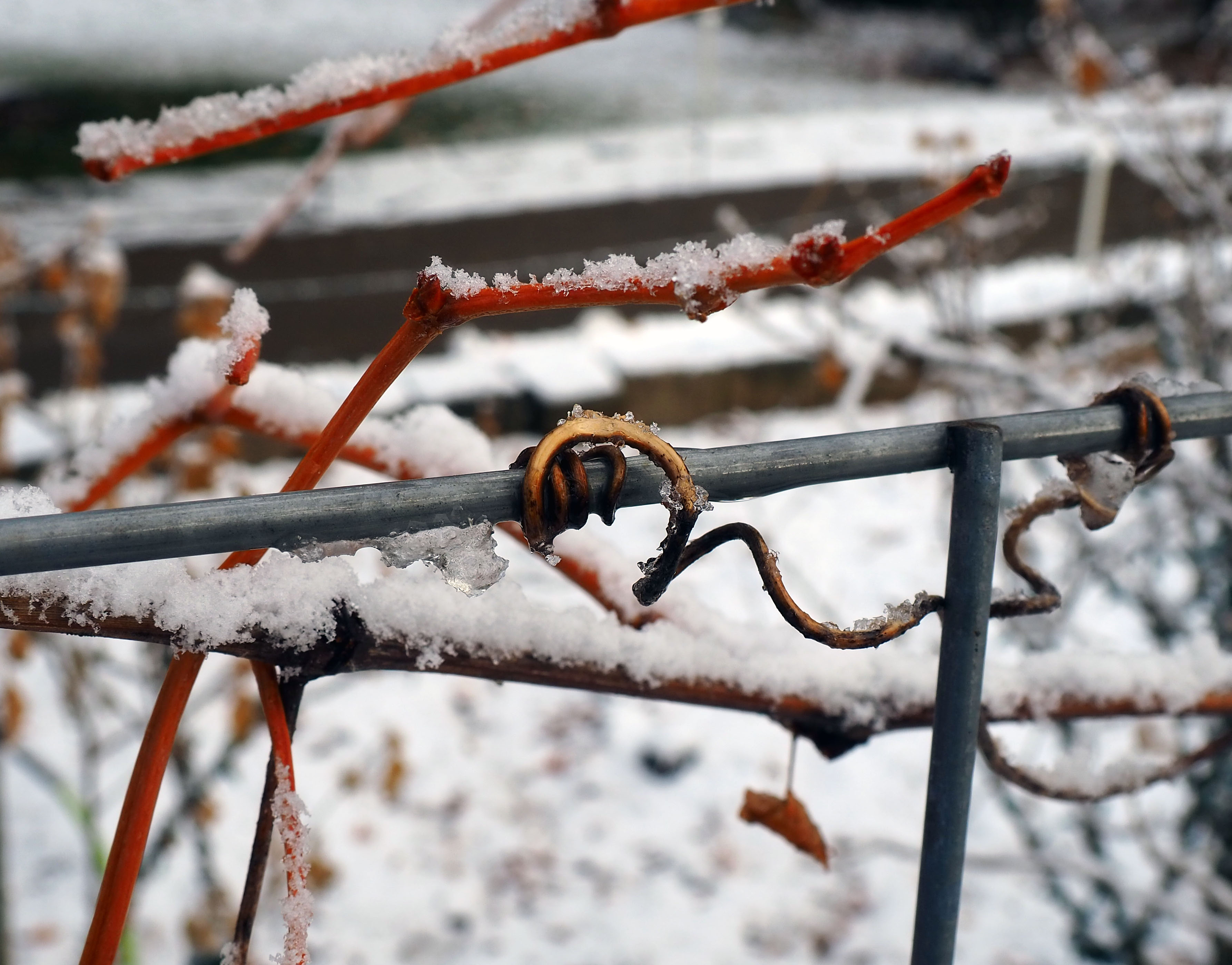
The tendrils of grape vines (Vitis spp.) are modified, sterile inflorescences.

The next three chapters are all about what plants need to survive, namely water, light, and nutrients. Gardeners know that if any of these three things are out of whack, their plants are sure to suffer. Luckily, plants have some experience adapting a number of ways to get the things they need. Roots can search the soil for water and pockets of nutrients. Shoots move in search of light and can produce leaves that match the intensity or amount of sunlight (smaller and thicker in full sun, broader and thinner in the shade). Relationships can be made with microbes that live in the soil in order to gain access to resources, and even to help plants defend themselves (which is the subject of chapter six). Sometimes light is too intense for plants, and plants have developed features to deal with this such as waxes on their leaves, hairy or fuzzy leaf surfaces, or additional plant pigments that can act as sunscreen. Some of these features also help the plant retain water when temperatures are high. Other plant species have adaptations to live in water-abundant environments, such as drip tips on their leaves to help them shed water or special tissues in their stems and roots that help facilitate gas exchange.

Plants need light to carry out photosynthesis, so the more light the better. But not always. The newly emerging leaves of some species are red, orange, and/or yellow in color which helps protect the developing tissues from the intensity of the sun until the tissues have time to mature, at which point they turn their standard green color. In the fall, the leaves of deciduous plants experience a similar color change but in reverse. This change serves a similar function, protecting leaves from sun damage as they reabsorb nutrients back into the plant.

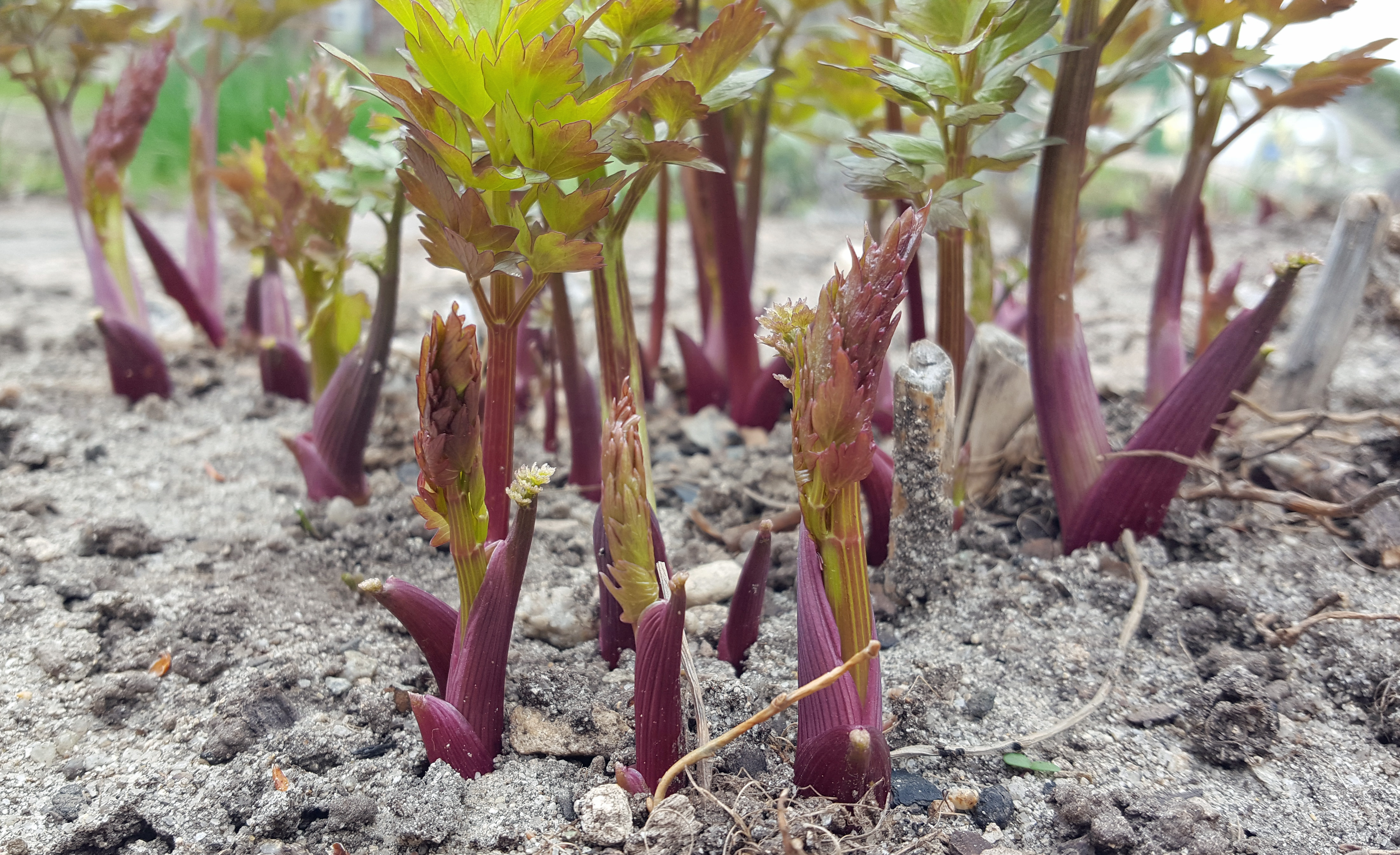
Lovage (Levisticum officinale) emerges in the spring, its leaves first taking on hues of purple and yellow which help protect the developing tissues from harsh, direct sunlight.

The chapter about defense is sure to be a popular one. Who doesn’t enjoy learning about the many ways these stationary organisms have developed to defend themselves against hordes of invaders out to destroy them? From fortifications like thorns, spines, and sticky hairs to any number of toxic substances produced within their tissues, many of which humans have learned to use for our own benefit. Some plants even recruit other species to help them out, like ants, mites, and various microbes. Of course, for all the defenses they put up, there are at least a few herbivorous creatures that manage to find a work around. And so the war continues.

In the following chapter, Zona covers another popular topic, plant sex. Pollinators and pollination have gained a lot of interest over the past decade or so, particularly among gardeners. Turning our gardens into habitats for bees and other insect pollinators is one way we can help conserve these important organisms. Understanding more about the specifics of pollination and plant reproduction will only help us improve these efforts. Learning about the many ways by which plants reproduce asexually also helps us out when we are trying to make more plants. Successful plant propagation and plant breeding rely on a good understanding of the concepts that Zona covers in chapter seven.

The bright yellow spots on the petals of snapdragons (Antirrhinum sp.) mimic pollen-loaded anthers and help draw in pollinators.

The final chapter is all about dispersal – how plants get around – and is one that I will be returning to repeatedly for some time. Plant dispersal is one of my favorite topics, and Zona does not disappoint. All the basic means of getting around are covered, and with them come dozens of stories that demand a curious mind look further into, like palm fruit dispersal by electric eels or the aardvarks that disperse the seeds of underground cucumbers. This a chapter that could have gone on for the whole book.

One of my favorite things about this book is that for the majority of the topics that Zona discusses, plant examples are given so that you can see for yourself, and many of those plants can be easily found either as a common garden plant or indoor houseplant. This means that you don’t have to travel the world to familiarize yourself with these concepts, instead you can see them in action right outside your door. Most of us, whether we have a garden or not, have easy access to plants, even if it’s just the weeds growing in the sidewalk cracks. This makes getting to know the Plant Kingdom a possibility for nearly anyone. As Zona writes, “a stroll in the garden or a hike through the woods is all it takes to begin a journey into a leafy, green world.” Let his book be “your passport, your interpreter, your currency converter, and your host on a learning adventure into the world of plants.”

More Book Reviews: